


True workplace culture transformation begins not with increased control, but with the radical act of letting go. Jessica Kriegel, Chief Strategy Officer at Culture Partners and author of Surrender to Lead, joins the show to share the “flashpoints” that redefined her leadership journey, from failing as a high-achieving executive at Oracle to finding emotional sobriety. She challenges the “work harder” muscle that often leads leaders into the “action trap,” offering instead a framework based on transparency, truth-telling, and leading with love. This conversation explores how surrendering the need for control allows leaders to foster psychological safety, navigate difficult transitions like mass layoffs with integrity, and drive sustainable business results by focusing on the beliefs that truly motivate human performance.
—
The Power Of Surrender In Driving Workplace Culture Transformation With Jessica Kriegel
It is truly my pleasure and honor to introduce my guest, Jessica Kriegel. Jessica is the workplace culture expert, keynote speaker, and a researcher. As a Chief Strategy Officer at Culture Partners, she leads research that challenges outdated ideas about control, power, and performance. Offering bold new frameworks that drive real business results.
She’s the host of the CEO Daily Brief and Culture Leaders podcasts. Not just one podcast, but two podcasts, and a frequent guest on CNN, Fox Business, CNBC, and Bloomberg. She holds an MBA and a Doctorate in Leadership with a Specialization in Human Resource Development. She’s pursuing a Masters of Divinity and is also trained as a death doula, a role that deepens her presence and perspective as a leader.
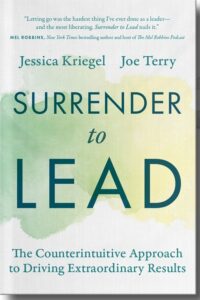
Her first book, Unfairly Labeled, breaks down generational myths in the workplace. Her latest book, Surrender to Lead, launched in January 2026. When she’s not doing all that, she’s cruising around Sacramento, California in a motorcycle sidecar with her eight-year-old daughter. That’s so cool. I’m so thrilled to welcome you to The Virtual Campfire, Jessica.
I’m thrilled to be here. Thank you so much for having me.
Of course. I have to take a moment to give a shout out to a mutual friend of ours that introduced us. That’s Jan Madura. She’s such a wonderful connector of people and just a wonderful person in general. Jan Madura, if you’re reading, you’re the best.
Amen. Shout out to Jan. I have been introduced to so many incredible people through her. If you have a chance to link her in or just get to know her, follow her. She has great content too.
Flashpoints That Shaped Jessica Kriegel’s Leadership Journey
She’s the best. Now that we’ve given all our love to Jan, let’s move on to you and get this show started. What I really look forward to doing and what we do on the show here is we talk about people’s flashpoints, the points in your journey that have ignited your gifts into the world. I know you’ve had a lot of interesting experiences along the way. You do a lot of cool things. I want to understand the journey. What got you to where you’re making such an impact in the world? As you’re sharing, pause along the way. See what themes are showing up. Sounds fair?
Sounds great.
Take it away and start wherever you like.
I’ve had so many flashpoints. Do you want me to go chronologically?
You don’t have to. Have fun. You can start from backwards, forwards. You can go forward, backwards, wherever you want to go. It’s fine.
Let’s start with the first big reckoning that I experienced in my leadership journey, which was realizing that I did not have all of the answers and failing fast. This was a failure for me. It was when I was at Oracle. I was at Oracle for ten years. I had many roles. It’s a great company because you can move around and try different things. I was in sales. I was in HR. I was all over the place. I was making an impact the most, I believe, in my role as an organizational development consultant. In that role, I was consulting with Oracle executives.

My clients were the top level of the organization. Not Mark Hurd and Safra Catz, who were our CEOs, but the one-level below them. The people that reported into our co-CEOs. The chief marketing officer, the chief operating officer, and then these CEOs of many businesses within Oracle. They were my clients. They were trying to drive results. They were trying to transform the organization. I was assigned to help them understand what was working and what wasn’t working. I got assigned to one new executive that they hired to be the Head of Cloud. They had poached him. His name was Shawn Price from SAP. This was when Oracle was an on-prem company. They were trying to move into the cloud. There was no cloud DNA in this business at this point. This was in 2012.
I was a hotshot individual contributor. I had achieved so much. I was in my Doctoral program. I had written a book. I was a very high achiever, high performer. I was of the belief that I could create any reality I wanted to if I just tried harder. If I just worked more, I would be able to get the result. When I met Shawn Price, he promoted me to something like seven levels in the organization. He thought I was such a top performer that I should be promoted to his Head of Strategy. I was one-person away from the CEO leading strategy for the cloud organization and our transformation into the future.
I had the false belief that I just needed to paint the picture, paint a vision, explain why and people would come along for the ride. That everyone else was going to. They had received the same memo I had received, which is if you just try hard enough, you’ll get the result. I was shocked when we rolled out this plan and it wasn’t as easy as that. It has been very easy to manage myself and my own personal success throughout my life. Because I’m an overachiever and an overthinker. As soon as I had to manage other people, all of my skill sets were completely useless to me. I had to learn the hard way, so to speak.
That was my first flashpoint. Getting rocketed up to a huge amount of responsibility in a major transformation of a large business and being completely clueless. Because I had developed this one muscle, which is just “work harder.” The “work harder” muscle doesn’t work when you’re leading. You know, this company has 140,000 people in it. That was my first flash point. I failed very quickly. It was a reckoning for me because I realized that I needed to develop a new skill set. That was maybe step one.
The second reckoning is more personal in nature. It’s when I hit my bottom and decided to get sober. I am a recovered alcoholic. I am five years sober. In 2021, I was deep in my disease. There are a lot of alcoholics out there that have hit their “bottom.” You would never have guessed that they were an alcoholic because they have the white picket fence, the family, and the successful career. It doesn’t look like alcoholism the way the movies depict it, right? The movies depict it like you’re living under a bridge.
I was also in deep denial about how much I was using alcohol to manage myself, self-regulation, manage my emotions, and manage everything about the experience that I was having. My bottom was maybe not financial in nature, but it was emotional. I had this Come-to-Jesus moment where I realized I had to do something differently. It was a moment of surrender.
What these two flashpoints have in common is that they were both a realization that I could not control the outcome, control the people, and control the dynamics. I had to let go. The results I got from letting go were beyond my wildest imagination in both situations. There was something there and yet it’s such a counterintuitive lesson. To let go does not feel like the key to success in business. If you’ve read Michael Singer’s book, he’s a demonstration of that. It can feel like an outlier though.
I saw this being real. We studied this with Stanford Graduate Business School. We tested this with hundreds of clients across many years. We realized there was something really here that actually works. It can be put into a framework. It can be understood more deeply. I would say there are more, but those were the two big flashpoints that led me to where we are with having written the book, Surrender to Lead.
From Control To Surrender: Failure, Sobriety, And Growth
Those are two very big moments. It’s interesting how you did tie the two together. I also will say, there’s something about that. Your first book is called Unfairly Labeled. When you think about it, that’s what people do with the idea of when we see an alcoholic. We think of one thing. When we think of how people show up, it’s one thing. I just had an interview with somebody who is homeless. The judgment goes up immediately. “That person has failed at life. They’ve done this and they’ve done this wrong.” Immediately, you put less than on that person. Then you realize that you need to stop that because they’re still human. There’s still an element of it’s a disease, as you say. I’m not saying there’s no connection between homelessness and alcoholism.
There is a connection between homelessness and alcoholism actually. In fact, a lot of my close friends are formerly homeless. This is one of the gifts that I wish everyone could be an alcoholic. What you think of it as an outsider is that it’s a bunch of people just trying to not drink one day at a time. That’s not what it is. It’s a bunch of people who are struggling and now they’re on this path to find a higher power. They’re humble. They’re seeking. They’re fully human. The people that I get to spend my time with are fully human in that way. There are people that I wouldn’t have run into in my circles. They’re way more interesting than the people that I was running into in my circles before.
I think there’s something there about being unfairly labeled, certainly about homelessness. We do it to everyone. The book was about generational dynamics, right? The way we label Gen Z, the way we label Baby Boomers. Even just something innocuous like a podcaster. How are you labeling podcasters in your mind? What’s the word association that happens with that? Is it positive? Is it negative? Already that’s an unfair label because you don’t know anything about who we’re talking about. All I said was a label.
If you have some people you couldn’t possibly lose, you also have others you definitely need to lose.
I love how you brought that up. I know your book was about something different. It’s just interesting how words still have power around this. It’s just interesting to see that connection and that “work hard” mentality that we often think is the gateway. “If I just put on more, if I work hard, people won’t see what’s really going on under the surface, which is that I’m maybe a bit over my skis.” If you know what I mean.
I love that you bring those two pieces into a congruence here. Letting go, we all say it’s easy, but it’s not. Especially in the corporate world where letting go seems like it’s one of those things of defeat or vulnerability. You can’t hack it. Tell me about the journey to expressing this with other people, especially when it comes to the workplace.
After I got sober, shortly thereafter, I left Oracle. I joined a technology company as their chief human resources officer. This was a startup. It was a nimble company. We had just signed a lease for Class A office space in Silicon Valley. We had hundreds of employees and then COVID hit. And so, we were upside down financially. In my first week, I had a Board meeting. The Board let us know that we were going to have to lay off 20% of the workforce. That was my “Welcome to your new job. Please lay off 20% of the company,” which I did not love the idea of. I was newly sober so emotionally, that was heavy for me. I was still learning how to have my emotions.
The way that layoffs usually go out there in the corporate world is the executives know it’s going to happen months before anyone else. They meet in private with a select few people that are in the know and they look at the spreadsheets. “How much do we need to get rid of? If we get rid of these people, will that be enough? What are the implications and how are we going to manage? How are we going to communicate it? How are we going to deal with the fallout?”
They come up with this whole plan. They let people in on the information on a need-to-know basis. The managers are asked to execute on this and then you drop the axe. You deal with the fallout of this major transformation within the organization that has deep psychological implications for everyone, but also deep financial implications for the business as a whole. That wasn’t going to work for me because I was exploring this idea of letting go and surrender.

What I realized was I couldn’t change the fact that we had to do layoffs. That wasn’t my decision. The company did need to do layoffs. It wasn’t like “We don’t like people. Therefore, we’re going to lay people off for fun.” We were in financial dire straits. What I could do was choose to deal with that situation differently. What I chose to let go and to surrender was to tell the truth, which is risky. You don’t see it very often. I came back from the Board meeting that first week. I called everyone into a meeting. I said, “Listen, I’ve just been informed that we have to let go 20% of the workforce. I don’t know when and I don’t know who. I don’t know how exactly but I will keep you informed as we progress through this process.”
This blew people’s minds because you don’t often get that heads up. Because executives are “trying” to manage the fear, manage the narrative, and reduce the risk. The risk that people will leave. Isn’t that what we have to do is get people to leave? Yet, we want the right people to leave. We want to control who leaves, which already that mentality reflects that you’ve done poorly at managing your team up until this point. If you have some people that you couldn’t possibly lose and other people that you definitely need to lose. Come on, if you don’t have people that have earned their seat on the bus, then why are they on the bus?
You maybe should be thinking about that situation well before you have a 20% cut that you’re working through.
I told everyone and that was a powerful experience for the people at that company. Experiences shape beliefs, right? The belief that some people had after that announcement was “I got to get out of here.” They started looking for jobs. The belief that other people had at that company was, “Wow, this company is willing to tell me the hard truth and be transparent in a way I’ve never seen before. I want to be here.” Some people left and other people didn’t. As we watched the company evolve over the next few months, we didn’t actually have to do any layoffs because enough people had left of their own volition on their own terms for other opportunities.
I can tell you if I called people from that company and said, “I want to recruit you over here.” I think they will come. I feel like they understood that I was a leader that was willing to surrender the need for control and to make things go my way. I was rather willing to let go of that and just live with integrity. Lead by example and let the chips fall where they may. They did. We didn’t have to pay severance. No one was left without being able to feed their families. The shareholder value was benefited by that approach because we didn’t have to pay severance. The shareholders were thrilled. Yet, we never do it that way because we think it will be bad. We’re living in fear. We’re leading with fear.
Radical Transparency During Layoffs
There are two things about what you shared that I think is interesting. First of all, this idea that the people who hear this message and they react positively. They’re probably thinking to themselves, “I want to re-engage myself.” Not to overuse the term engagement, but that’s really what happened. They became more engaged in the company because they saw themselves. “These people want to do it right. They want to be transparent and that’s wonderful. Now, I’m even more engaged in being here.” That’s wonderful.
The other part of it is this idea that when people feel like the change is happening to them and they have no agency over it. That really feels like, “Okay, well, I feel like I’m blindsided. It’s not healthy.” When they feel like they’re involved in the change, there’s an element of they can help shape where this is going. I feel like that, in some way, is what that scenario feels like.
It’s a powerful and unique experience.
Such a great example. So, here you are at this company, laying people off, having to think about laying people off. You have to downsize and then you move on. Where did you go from there?
I came to Culture Partners where I am now. That was in June 2022. I was keynoting. My keynote career was doing really well. I believed that I needed support. Every keynote I do, there would be a slew of follow-up from people in the audience who were saying, “Can you help us implement that?” I didn’t have the capacity to do the keynoting that I was doing and the consulting that was being requested of me. This was a goldmine of leads that I needed to follow up on that I couldn’t do.
I reached out to Culture Partners because they had a reputation of being very results-driven. Some culture companies are out there and they’re very touchy-feely. They’re very Kumbaya, Trust Falls, Do-The-Right-Thing kind of vibes. Those are fine. But if it doesn’t lead to results, I don’t believe in the sustainability and success of your company. They have to be the things that we need to do to do the right thing in order to get the results. Culture Partners had that reputation.
I reached out to their CEO, Joe Terry, who’s my co-author on the book. I said, “I’ve got all these leads. Let me send them to you. You can pay me a cut of whatever you guys follow up on.” He said, “That sounds great, but how about instead you just sell us your business? Come work with us and be our Chief Strategy Officer.” The rest is history. I sold my business. I became a member of that team. So much has changed since then.
That was also a flashpoint, a big exercise in letting go. As an autonomous entrepreneur, I was making all of the decisions. I agreed thoroughly with my decisions. And then, I joined this team of people. Here’s what I got to let go of. I got to let go of all the consulting. I didn’t have to do any more sales. I didn’t have to do any more marketing. I didn’t have to do any more finance. I just got to do the keynoting and the thought leadership that I was doing. It also meant that I have a lot of people giving me opinions about what I should be doing and how I should be doing it.
That took some adjustment because I am a control freak by nature. I think that’s my baseline comfort zone. They say you teach the things you most need to learn. I think that’s why I wrote this book because surrender is something I need to learn. It’s a daily practice for me to remember to be in that head space as opposed to the other head space, which is ego and fear and control. I’m certainly not perfect at it, but I have spent a lot of time thinking about it. And so, here we are. There’s pros and cons. There’s a lot of people that have opinions that I disagree with. A lot of the time, they’re right and I’m glad that I listened.
What’s interesting is that so many people think, “The grass is greener over here or over there.” There are pros and cons no matter what path you take, whether you’re working by yourself, working in your own organization or as part of something else. I think you just have to be able to let go of any preconceived notions, what the challenges that you may think you’re going to run into, and see what happens there. Everything’s an experiment, right? You allow yourself to lean into the experiment. See what happens. Nothing’s permanent. From that perspective, you have this opportunity to say, “Hey, if this doesn’t work out, I always have the opportunity to go and do something else.” Would you agree with that?
Yeah, absolutely. We forget about that. I have a friend who called me. She was terrified she was going to get let go from her job. She’s a respiratory therapist. She’s on this probationary period at this new hospital. Her manager said seven days ago, “When you come back for your next shift, we’re going to have a conversation about whether you are a good fit for this company.” She spent the seven days panicking. She had seven days off and she was in complete fear the entire time. I said, “Listen, God’s got you. Whatever is going to happen, you can always make new choices and experiment with something new. Maybe you’re not a good fit.”
Anyway, she went to work and the manager forgot to have a conversation with her. She’s staying in that unknown and that uncertainty. Frankly, we are all in that unknown and that uncertainty. If you saw there was just an announcement. Amazon just laid off another 16,000 people. Corporate workers. We’re all one day away from losing our jobs. We’re one day away from geopolitical unrest that leads to significant changes in the way that we live our day-to-day lives. We don’t know. Who knows?
What we control is becoming less and less controllable. It’s like we have to just let go and surrender, to use your language. Also, we have to let go of trying to be in control of everything. Just show up every day. Do what you can.
It’s the attachments that we have to the way that we think it should be and the way that we want it to be. That is what I work on every day. Of course I want my book to be a New York Times bestseller. That would be great. I will find out soon if it is. What I am reminding myself every hour when it comes up in my brain, “My goodness. Are we going to get the list? What if we don’t?” My desire to be on the list is my personal attachment.
Maybe there’s another book that has been written the same week that is far more powerful and would make a far greater impact in the world than mine. If I make the list, that book doesn’t. So many people will miss out on hearing their message. That’s the reality, right? My desire to get my way is not the most important thing out there. I keep remembering that surrender. Surrender to lead. I’m eating my own dog food.
I love it. Since we’re tapping into this right now, we’ve talked so much that so many things have led us up to the book. Let’s actually share a few more ideas from the book that you haven’t already talked about.
Leading With Love Vs. Fear In Workplace Culture
Shall I pick?
Yes, it’s the player’s choice.
My favorite concept from the book is around this idea of leading with fear or leading with love. I did research on this. I studied when love actually shows up in the workplace. I interviewed 60 CHROs at Fortune 1000 companies. I asked them to identify when they see this showing up. There were basically two situations where love genuinely is demonstrated in the workplace. The first is when there is a terrible crisis. There’s a war or there is a death in the workplace. Something terrible happens that breaks the facade of the workplace acting as it normally does. It reminds us of our humanity. We come together.
Examples are when Russia invaded Ukraine. Organizations that had facilities in Ukraine, for example. Cisco had facilities in Russia and they had facilities in Ukraine. They had to make a decision about whether they were going to pull out of Russia. It was going to have serious implications for people on the ground. Cisco is a technology system. This means that hospitals are using their systems. If they pull out, people could die in those hospitals. That’s an example of when love shows up in the workplace.
The other example is when companies are doing wild leads well. When they’re beyond their wildest imagination, successful and achieving not just the results, but beyond their results. When you are kicking butt is the second place when love shows up in the workplace. It brings out your inner “I love you, man. We’ve got a lot to celebrate. I’m feeling the love. We did it guys. We’ve climbed the mountain.” So to speak.
Why is it just in these two extreme situations? The rest of it, we’ve become these robotic professional beings. There’s been the whole movement around Bring Your Whole Self to Work. I actually am not super comfortable with the way that this has been rolled out by the HR community because it presumes that the people that you report into, the leadership at your company are ready to receive your authentic and whole self. They’re not. It’s, “Bring Your Professional, Not Annoying Self to Work” is more like it from their perspective. We have to be careful about this and pragmatic about it.
What we’ve found, this is at the heart of surrender. When you lead from fear, you are restricting. You are limiting the company’s ability to adapt. You are limiting psychological safety and that ability to speak up that you need to be able to listen to what’s going on in the ground. When you lead with love, you’re exposing yourself in some ways. That exposure also opens up possibility and potential. I’m trying to bring love back into the workplace, not obviously romantic love. I’m talking about love the way St. Thomas Aquinas defined it, which is to will the good of another. This is a practical tool for getting results in business. If only more people gave it a shot.
It’s brilliant. I couldn’t agree more with this idea that that love, the type of love that you’re describing, is exactly what we need more of in the workplace. The problem is that it’s got a branding issue, right? These people hear the word love and they immediately start thinking like, “Oh, okay. We can’t really talk about that here.” It’s almost taboo.
Some companies have tried. Airbnb made love one of their values. There was another company that had a whole agape love commercial that they showed at the Super Bowl. There are some companies that are leaning into it. I think we just need more leaders willing to go there to role model it.
You can’t just insert this at the middle level. You can’t just say, “Let’s just have middle management believe in love.” Then have the senior leaders just be like, “Whatever they want to do is fine.” They just follow, have a deaf ear against this whole idea of love. It just has to be believed through and through the organization in order for it to really take hold.
The way that you get people to believe something in an organization is through experiences. Someone has to begin to create those kinds of experiences that will spread that belief. There is the circular lack of accountability in corporate America where everyone can finger point at someone else for being responsible. The frontline employees blame the leaders. The leaders blame shareholders. The shareholders blame the expectations of them. Everyone’s got someone to blame.

Ultimately, whoever’s reading, you are the person who can start that. It doesn’t matter where you are in the organization. You can make that choice to show up differently, demonstrate that, and create an experience that will maybe help that belief spread.
The keyword is spread because there’s no limit to what can happen. It has to start somewhere and we have to believe it.
Let’s say that it doesn’t spread and all you’ve done is led with love. It probably won’t turn out bad for you.
It’s still a win, right?
Yeah.
I think one of the things that I’m really enjoying about this conversation and the exploration that we’re having here is this idea. Even inside an organization where there’s a feeling that, “We don’t really believe that everyone has the same sentiment.” You can do your part. Everyone can own their piece of the pie, right? Ultimately, that has an effect on the people around you. That impact is what we’re looking for.
One thing that I think is important is also to make sure that it’s results-oriented. Coming back to Culture Partners, you said earlier they were a very results-oriented organization. I think the key thing is that you can’t just say it. You have to actually take action. Think about how we are making sure that what we’re saying is actually being put into practice and we’re actually measuring in some way.
Escaping The Action Trap In Business Strategy
Yes. This is tricky because a lot of companies will think, “I want to get a result. What action do I need to take?” Then, they get stuck in something called the action trap, which is they just focus on actions. “I got to do more.” Leading you back to the beginning of this conversation, where I started, which is “I just have to work harder and I’ll get the result.” Being in the action trap, as a leader, is ineffectual in driving results with a large group of people. This is where you have to zoom out. Ask yourself the question, “What will motivate your team to take action without you just telling them what to do?”
What we found in 37 years of business is that leaders often try to lean into processes and procedures to get people to do something. But, people will not act in alignment with the processes. People will act in alignment with what they believe. It is their beliefs where you, as a leader, need to begin to understand. “What are the current beliefs that my team holds today that is getting in the way of us achieving our result? What do I need those beliefs to be?” Once you identify those beliefs, then you can influence those beliefs through the experiences you create.
People act in alignment with what they believe. So as a leader, it’s their beliefs you need to begin to understand.
The action is not taking action to get the result. It’s taking action that is through the lens of, “What is the experience I am creating right now as I do this? What belief will this experience shape in my team? What action will that lead them to take?” How many times have you seen a CEO give a town hall speech where they’re like, “Performance-driven, we’re going to be really innovative this year.” As if declaring it makes it so in the hearts and minds of employees.
What they need to have is the experience that taking risks is celebrated and that they can fail fast. That they will be recognized for their willingness to take that innovative action as opposed to “You screwed up. Here’s the consequence. That guy made a mistake and he got let go.” These are all experiences that people are having. That’s leading to the right belief. It’s a different way of thinking about what I should do as a leader. It’s not what I should do. It’s what experience should I create to drive the right beliefs so that they will take action so that we can get a result. That’s super results-driven culture work.
The alignment of all of that, I think, is key. I love that you just did a great job of creating that and really explaining how that all comes together. It’s the alignment of all of them that really makes it come to life.
I believe that you are perfectly aligned right now within your organization. You are getting the results that you’re getting because of the actions that people are taking, because of the beliefs that they have, because of the experience. You’re always in alignment on this. If you want to get different results though, and this is change activation or just growth. You are going to need new actions, which requires new beliefs, which requires new experiences. That’s really the hard work of leadership, which is surrender. Because it’s not just, “I got a new strategy. I’ll hire some consultants and tell everyone what to do.”
We always know how that works out. It’s not great.
Frankly, it does work a little bit. But the research we did at Stanford Graduate Business School identified that companies in that action trap grew 10% over three years. Companies that broke out of the action trap, were able to grow 42% over that same period of time. It’s 4x the amount of potential as measured by revenue growth when you get out of the action trap. You can grow. That’s also why it’s seductive. Because people see it working a little bit and they keep going. Think of what you’re leaving on the table because you’re in that stuck mindset.
That’s crazy. We’ve covered a lot of ground. I’m just feeling this pull back into your personal story again. I want to hear some lessons that you’ve learned along this journey. Besides letting go and surrendering and all that, what have you learned about yourself on this journey to getting where you are that surprised you?
Spiritual Awakening And The Study Of Divinity
I’m doing that Masters of Divinity because when I was 37, I had a sudden spiritual experience. I went from a lifelong atheist to a believer overnight. I didn’t really know what I believed in. I had the spiritual experience that was like a coincidence. That was too much of a coincidence to be a coincidence. I instantly believed in a higher power. I didn’t have a name for it or a religion associated with it. It was just there’s something bigger than me. Just that thought alone opened me up to this idea of not focusing on what I want. If there’s something bigger than me, then maybe there’s something bigger than what I want. It’s what the universe wants, right? Or what Jesus wants, what Allah wants, or whatever.
If there’s something bigger than me, then maybe there’s something bigger than what I want.
At the time, I had no idea. I still don’t know. I have some beliefs now. That broader perspective led me to realizing that I need to be useful. As a person in this world, I should be useful to whatever that larger thing is. This is what led me to do the death doula work. My father died suddenly and alone in an elevator. It sparked an interest for me in dying and people who die alone in particular. I found an opportunity to volunteer with the UC Davis No One Dies Alone Program.
In No One Dies Alone, these people will come into the hospital. They have just a day or two left to live but they don’t have any friends or family. They’re in a hospital room and they’re dying. The doctors and the nurses are not there 24/7. They’re in and out of the room serving multiple patients. This program is designed to have volunteers come and sit with these dying individuals so that they don’t die alone.
When I heard about that, I thought, “What more profound impact could I have on the world than being there with someone who otherwise would die alone.” It felt like the most important work I could do. Far more important than the books I’m reading, the writing, and the podcasts I do. It just felt deeply sacred. Something that I felt uniquely capable of doing. I wasn’t freaked out by it because of my experience with my dad. So, I did it.
I also learned in doing that, it is the most present that I can be. Nothing matters when you’re sitting with someone who’s dying other than the person that’s dying. All of the racing thoughts that I have throughout every day about “Am I going to get that deadline in time? Is my daughter going to be happy at school?” All of the things that I’m constantly worried about. They go away in those moments. I was benefiting from it. I was experiencing something I was incapable of achieving, but I was also serving. Dying is the ultimate act of surrender, right? You cannot control death. Sitting with someone in that space and watching them go through the process. It’s a deep learning experience for me too. Is it related? It is related. How it’s related, I think these lessons will continue to unfold.
I love that you share this. First of all, having been in the room when my mother passed and experiencing that passing is definitely something that you never forget. You never forget that moment. Realizing that the connection you have with the person who’s passing, realizing that you were able to be there for them in their last breath is really deep. Also, this feeling of like, “This is not done yet.” You have a lot more to experience through this process.
I think, in many ways, it shows the range of what we, as humans, are capable of experiencing. That’s a beautiful thing. Death, people are like, “That’s awful. Why would you want to be in such a somber situation?” It’s also beautiful in its own way. Experiencing that and being part of that is just a range of emotions that we have to be okay with.
I do believe that if it weren’t for tragedy and death, we wouldn’t be able to experience beauty and joy. They are the two sides of the same coin. When I walk my dogs in the morning, I cry just from the beauty of it. These beautiful, loving animals running in a field and the sun beaming down. It’s just like, “Oh my God, this is amazing.” I didn’t get that before. Before, it was like, “Oh my God, I have to walk my dogs again.” Getting to experience the full range of the human experience.

Why am I crying? It’s because there’s a part of me that’s like, “One day these dogs won’t be here. I get to have them right now.” They’re so loving. The demonstration of the kind of psychology I would love to have. Just fully present and fully excited almost at every time, except for when I’m hungry. In which case, fully annoying. They are when they’re hungry. I spent a lot of my life worried and anxious about the minutiae of things that were really unimportant. I still do that but I do it less.
I appreciate you sharing this. I couldn’t relate more to the dog story, but also just the general dealing with the minutiae. Also, seeing the importance of every moment that we can have because life is precious. We need to be able to experience every moment as if this could be our last and enjoy that. It becomes a moment of awe as we sit there and experience every moment like it’s the last one.
Totally.
Books That Shaped Her Leadership Philosophy
Jessica, we’ve been on such an amazing journey together. I’m really grateful that you said yes to this conversation. I have one last question for you. That is, what are one or two books that have had an impact on you and why? You can break the rules and say three if you like. That’s okay.
Thank you. I might just do one. I will say The Way of a Pilgrim is definitely, by far, number one. This is a book that is about a Russian peasant, basically, that chronicles his story of trying to be in ceaseless prayer. Trying to be in conscious contact with a higher power at all times, which is a journey I guess I’m on. I loved seeing this person’s challenge with it. It’s really interesting to read something written by someone in a different time in a different geography and a different world entirely. That’s number one. I don’t think we know who he was. There’s various translations. I don’t know who the author was.
What’s another one? My favorite book in the world is Everything is Illuminated by Jonathan Safran Foer. It’s fiction but it’s just so good. I highly recommend that if you’re looking for a book on fiction. Creativity and storytelling is the most powerful experience that we can create. We are people moved by stories. That’s why Hollywood makes so much money. It’s why books are so popular because we love stories and they shape beliefs. Stories for the sake of stories, I’m all for it.
Creativity and storytelling are the most powerful experiences we can create.
I appreciate you sharing that. The last book, that sounds really interesting because I talk a lot about illumination. I think it would be interesting for me to dive into a book about illuminating.
Everything is Illuminated. It’s about someone’s learnings on their journey. It’s just really good. Highly recommended. In fact, everything by Jonathan Safran Foer is really good. He also wrote Extremely Loud And Incredibly Close, which is about 9/11. That was a novel. I love that. Maybe my second favorite book. Then, I saw on an airport once a book called Eating Animals by him. I thought that was his third novel. I bought it and read it. It was not a novel. It was a dialogue about why we should be vegetarian. I got tricked into vegetarianism for four years after reading that book. I couldn’t eat meat. Eventually, I dated a guy that was just unavoidable to eat meat with him. Jonathan Safran Foer is the best author in my opinion.
I really appreciate that. That’s a wonderful bread crumb to leave for us. I always have to go buy books from all these podcasts because they’re always leaving me with some interesting things to check out.
Enjoy.
Thank you.
What’s yours, out of curiosity, Tony?
I have so many that come to mind.
Just give me one.
One of my all time favorites is The Art of Possibility by Benjamin Zander and Rosamund Stone Zander. If you haven’t read the book, it’s definitely worth checking out.
Is the book white?
No, it’s yellow. Sometimes, it may be coming in white. He’s a music teacher. He’s also the head of the Boston Youth Philharmonic. He has these lessons about how to think about things differently. The Art of Possibility is really about engaging people into this path of seeing the possibility in the most darkest situations. It’s almost like the Viktor Frankl for a new time but with a very lighthearted story.
Less depressing story?
Yes, exactly.
I’ll check that out.
That’s worth checking out. I appreciate you asking that. Not a lot of people ask me those questions. Turning the mic on me. Jessica, I just have to say thank you so much for everything you’ve shared. This has been a wonderful conversation. I especially appreciate you sharing some of the raw moments of your journey. It’s great to be able to bring that to the state of this podcast so that people can hear it and see that they’re not alone in their own journey. I appreciate it.
My pleasure. Thank you so much for having me. It was a great conversation.
Before I let you go, I want to make sure people know where to find out more about you. Obviously, they’re going to find your book, which is going to be something that is amazing. People are going to really enjoy reading it. Tell people where they can find you.
They can go to SurrenderToLead.com to find out more about the book. You can go to my website, which is JessicaKriegel.com, if you’re interested in a keynote or something, then the company, Culture Partners, is CulturePartners.com.
Thank you again for that. Thanks to the readers for coming on the journey. I know you’re leaving really inspired. Please go check out all of these amazing things that Jessica’s shared with us.