


Meaningful work is the foundation of engagement, performance, and fulfillment—yet so many people feel disconnected from what they do. In this episode, speaker, author, and professor specializing in human flourishing at work, Tamara Myles, breaks down the science of meaningful work and explains why it’s not about the job itself, but how you experience it. You’ll learn how leaders influence nearly half of that experience and discover the three core drivers of meaningful work—community, contribution, and challenge—that shape thriving teams. From the power of belief and feedback to the hidden impact of loneliness and bore-out, this conversation offers practical ways to create meaningful work for yourself and others, no matter your role.
—
The Science Of Meaningful Work (And Why It Changes Everything) With Tamara Myles
It is truly an honor and a pleasure to introduce my next guest, Tamara Myles. Tamara is a Speaker, Author, and Professor specializing in the science of human flourishing at work. She helps leaders and organizations like Microsoft, KPMG, and MassMutual unlock the power of meaningful work to drive peak performance, innovation, and resilience.
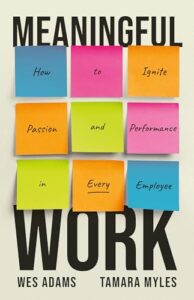
A faculty member at Boston College and a researcher and instructor at the University of Penn, her work challenges assumptions about work, showing that when leaders make work meaningful, they create thriving teams and lasting impact. Her latest book was published in 2025, Meaningful Work: How to Ignite Passion and Performance in Every Employee. It’s fantastic. Without further ado, let me welcome my guest, Tamara.
Thanks so much for having me.
Of course. I’m so thrilled to get into this conversation. Big fan of your work and looking forward to just exploring a bit more. That’s what we’re going to do in this episode.
Great, I’m excited and ready.
Awesome. The way we get started on the show is always about the flashpoints, the moments in your journey that have ignited your gifts into the world. As you’re sharing, you can share what you’re called to share, and along the way, we’ll see what themes are showing up as we navigate. Sound good?
Sounds great.
Wonderful. Please take it away and start where you like.
Defining Flashpoints: From Brazil To The Big Apple
Okay. I think one of the big defining things that make me who I am is my upbringing. I grew up in Brazil, part of a huge family, think My Big Fat Greek Wedding messy family, but very close family. We all lived in a big city but somewhat near each other. It was the traditional lunch at Grandma’s house every Sunday with everyone. My grandma’s Italian, so we had that.
Very close, I have fourteen first cousins. We all grew up very close and in Brazil, we are so relational, everything’s about family and community. I think that was a really important part of who I am. Professionally, early in my career, I worked in advertising and I got a job at an agency in New York City, which had been a lifelong dream, like, even growing up in Brazil, I had wanted to live in New York and work in advertising.
My boss, she was like my boss’s boss at the time, the owner of the agency, Madonna Badger, had a huge impact on my career. There was a moment I was about a year or a year and a half into my tenure at the agency and the two of us were traveling to go present some packaging design and advertising concepts to one of our big clients. That morning, we were taking a train to Maryland from New York City at like 6,30 and at 5,30 she calls me to say that her daughter’s sick and she can no longer make it.
I was like, “No worries, we’ll contact the client and reschedule,” and she was like, “No, you go and you present. You’re ready for this.” I was like, “What? I think we should reschedule,” and I was so nervous. I didn’t feel ready to go and tackle a big client meeting, presenting our creative concepts and ideas and all of that by myself.
The fact that she believed in me and said I was ready made me see myself a little bit differently and I wanted to prove her right. I was like, “What if I’m right? What if I can do this?” I spent that whole train ride practicing and re-practicing and all that, and the meeting went really well. That moment really stands out to me as a critical moment.
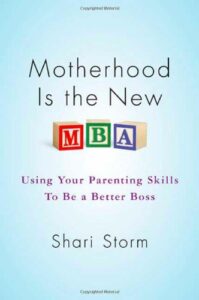
I think every moment when somebody believes in you a little bit more than you do, I think is so crucial. That one stands out. Another one was just becoming a mom and being a mom. I have three kids, but that has been transformational as any parent can attest, not just personally but even professionally. As a leader, I think there’s a book that I read that’s like Motherhood is the New MBA. You learn so many leadership lessons through parenting that can apply at work as well. I would say those three are big shaping moments of characteristics of my life.
The Belief Unlock: Tearing Apart The Threads Of Potential
I’m so glad you shared all that. First of all, there’s so many things that you dug into I want to tear them apart, little threads, in a good way. One of them is moving to New York. It’s a big leap and it is especially a big leap from where you’re coming from where you have this safety net of people that supports you, sees you, and all that. You move into New York and you’re like, “Okay, now what?”
I’d love to know a little more about what prompted the journey itself to New York. Before you answer that, I’ll just say I love that you brought this belief piece into it. I often say the same thing, this idea that having someone who believes in you and believes in your capability is the unlock moment for people to say, “Maybe I’m holding myself back. If they see something in me, I want to rise to that occasion.” enough of a rant on my part, but please tell me about the journey to getting to New York.
I grew up going to an international school in Brazil. My parents really wanted us, me and my siblings, to be bilingual. They were ahead of their time because it was a school mostly catered to kids of diplomats and expats and all of that. I grew up going to this very small private international school. My schooling was all in English and we actually followed the American school schedule and things like that.
I was very familiar with the United States and the American way. We had traveled here for vacation, Orlando, Disney thing, a couple of times. I did a year of exchange student in high school. I lived in Illinois with a family for my junior year of high school and that was a great experience but it was also really hard. I was so homesick. I left there like, “Okay, like, I don’t know if I can be away from my family again. This was really hard.”
I remember reading something or watching, I don’t know if it was a magazine article or a TV article where they were describing something about New York City. It just really spoke to me and I was like, “Someday I’m going to live in New York City. I’m going to live in New York and I’m going to do it,” and so I just knew it.
The journey getting there was very messy because at the same time that I wanted to live there, I didn’t want to leave my family. I started college in Brazil. I was like, “I’m not leaving, I’m going to stay here.” a couple of years in, and my sister, who’s a year older, went to college in the US. She was in the US for college, I was in Brazil, and I was just really seeing that contrast between her experience and my experience.
I decided to apply for a scholarship and see if I could come. I ended up getting a full ride, a merit scholarship. I transferred and I went to school in the St. Louis area. When I graduated, I got a job in St. Louis. It was my first advertising job. I was there and I was like, “You know what? I’m going to do it. My goal was to just always to live in New York.”
I started applying. It was HotJobs.com at the time. It was Monster and HotJobs, but I remember it was a HotJobs job that I found for this ad agency in New York and I applied. They had me for an I flew in for the interview and just loved it. I hit it off with them, they hit it off with me. It was a fashion and beauty advertising boutique agency and I ended up getting the job and moved to New York and it was amazing. I loved every minute of it.
What you’re really demonstrating here is this idea that sometimes you have to leave something we’re comfortable with to get to the next place that’s going to unlock all of our potential but also create a life that’s more fulfilling.
I thought it was going to be a two-year thing. I had a temporary work visa and I was like, “I’ll stay for two years.” That was my plan. Here I am, many years later.
Brilliant. The last thing I’ll just want to follow up on is I love that you said that motherhood or parenthood is a big changer, a big inflection point, a big flashpoint because of the fact that I think you start to think what’s essential? What’s important? As opposed to doing everything, which oftentimes we get stuck in is trying to spread ourselves so thin. Now you’re like, “Well, I have to focus.” It’s a great thing to have that focus and say, “This is what I want to do, this is how I’m going to do it, and I want to make space for the things that are important, my kids.”
Exactly. I think it’s one of those things that helps you reorganize your life where everything falls into place. It’s messy. I’m not romanticizing parenting and working and building a business and doing all of that. It’s hard. At the same time, I think it’s just very grounding because it’s just so clear what the priorities are.
We’re going to get into the journey to this book, which is amazing, but what had you thinking, “I could write a book?” This is not your first one, or is it your first one?
This is my second book.
The Peak Productivity Pyramid: Unlocking Possibility
Yes. Tell me about writing. The process and what led to this particular book, Meaningful Work?
Yeah, so my first book came out in 2014 and it’s about productivity. It’s called The Secret to Peak Productivity. I wrote that book when my kids were little. I had an 18-month-old, a 3-year-old, and a four-and-a-half-year-old and I was writing this book and it was really messy and crazy. What happened was after I had my first child, my daughter Bella, it was a decision that was made for me in a way. I actually decided to take a step back from the full-time workforce and started consulting.
Actually, for my old agency in New York, started doing some strategy and research work for them. I really liked that part-time entrepreneurial thing. As a young mom, it was a great way to balance everything. That ended up growing into the business I’ve now been running for many years. The focus of my business in the beginning was really helping small businesses and then grew to larger businesses with productivity systems.
Not just individual productivity, but how can leaders shape environments where you remove some of the friction so people can actually do the work that they want to do and focus and all of that. I started doing that. Through that work, I developed a productivity model that was based on Maslow’s hierarchy of needs. It’s called the Peak Productivity Pyramid. People started inviting me to speak about it and so I created all these workshops.
I was like, “Maybe there’s a book in there somewhere.” I ended up hiring a writing coach who helped me. I had no idea how to write a book. She guided me through it and I wrote it in nine months. I was like, “If I can’t sell this book, that’s fine, at least I organized all my thinking. It’s going to be easy for me to create workshops.” I ended up getting an offer, published it, and then it led to more speaking and all of that.
At the top of my pyramid, so if you think of Maslow’s pyramid which it’s not really a pyramid but we’re going to stick with this for now because that’s how most people know it where self-actualization is, at the top of mine is a level that I call possibility. The idea is that when we have systems in place and we align the things that we do every day with the goals that we need to reach and we feel under control, we feel more productive, we can think of and do things that we may not have imagined were possible. It opens up possibilities in our lives.
What I was noticing then and when I was consulting with clients and working, coaching people one-on-one, was that the more productive people became, the more time and space they had to focus on what truly mattered. The more time they spent doing this work that really mattered, the more energized and productive they became. There was a virtuous cycle in place.
When we feel under control, we feel more productive, we can think of and do things that we may not have imagined were possible.
That’s when I decided to go back to school and study the science behind this cycle. What does this mean? What is this possibility level unlocking? I went to the University of Pennsylvania to study applied positive psychology under the founder of the field, Marty Seligman. On the first day of class, I met Wes Adams, who became my research partner, dear friend, and co-author on the book. He had also come from a completely different background but also come to study leadership and meaningful work. We started trading ideas and papers and all that. Decided to partner up and then the rest is history.
I love what you shared because there’s something about having a partner in the process of creating this. It’s you can start to bounce ideas off each other and see how it evolves, not just as a single focus.
I will say, like, yes to all of that for sure. I am so grateful. At first, when he was like, ” we should think about partnering and doing this together,” I was like, “No.” he was like, “Why? We’re literally studying the same thing.” I’m like, “Yeah, but I want to do my own thing, you do your own thing. It’s going to be fine.” I had been working alone, running my business and just hiring subcontractors and stuff for so long that I was like, “Yeah, I don’t know if I need the headache or how is it going to be?” I was afraid of what it would be like. I’m really happy he convinced me because it’s been a really awesome experience.
I think that’s so cool. It is great to hear that you had this restriction of like, “I have to do it on my own.” you know that it’s so much better together. You just have to embrace the friction and things along the way that happen when you’re like, “I think this, I think that.” And before you know it, you’ve sometimes found a middle ground that combines both. Our strengths are so complementary. We bring such different perspectives that it makes the actual work stronger.
Busting Myths: Meaning Vs. Purpose
I would love to dive into the book itself. I just think that the timing is so spot on in terms of we needed this. I think a lot of people have been, to borrow the Adam Grant term, languishing in their jobs because they just don’t know how to create a path to better work. I would love to just have you share some of the key concepts and things that you think are important that maybe people need to know.
The idea behind our research and the whole premise of the book is that leaders have a big impact in shaping the environments in which individuals find meaning. Our research was the first one to look at the leadership role, but also find specific leadership practices that lead to more meaningful work. What we found is that leaders are responsible for half or almost half, 48% of our experience of meaning at work.
The practices that make work more meaningful fall under what we called the three Cs, which are community, contribution, and challenge. Before I go into each one, I want to just bust some myths about meaningful work and then maybe define it just so we know what we’re all talking about. The first one is that meaningful work is reserved for professions helping professions or healthcare, people that are saving lives, maybe nonprofits and things like that.
While that work can actually be very meaningful, any job what we find in our research and in other research in the literature is that any job can be meaningful. In our study, we had 25 industries, thousands of participants across multiple roles, from janitors and hairdressers to leaders of organizations to nonprofits, and they all found meaning at work.
Meaningful work is not about what you do, but it’s how you experience it’s about how you experience what you do. That’s really important that every job can and should be meaningful. The other big misconception is that meaning and purpose are the same thing and they’re often used interchangeably. What we found is that purpose is a part of meaningful work, but it’s not the whole story.
Meaningful work is not about what you do, but it’s how you experience what you do.
Purpose falls under the contribution C, because we want to feel we’re making an impact, we’re contributing to a purpose. Even just having a purpose, if we don’t know how what we do every day contributes to that, it’s not enough. That’s why we say contribution activates purpose. Those are the two big myths. Meaning and purpose are different, meaning is bigger than purpose, purpose falls under meaning, and then that every job can be meaningful because it’s not about what you do. It’s about how you experience what you do.
The Three Cs: Community, Contribution, And Challenge
Well said, because I think those three Cs are a great lens to be thinking about this through. I do agree, purpose leaves a lot to be desired in terms of like, “What do I do with all this? What’s the meaning of the purpose?” I think it is nested into that. Meaning is just a bigger part of the whole story. Just seeing the arc of all this come together, community, contribution, and challenge they all make sense. I guess the question is, what comes first? If there is an order, if you had to put it in a “start here, go here, and then go there?”
I would say there is no order. They don’t all have to be present at the same level. They all have to be somewhat present because the three of them work, there’s a multiplier effect in place. They all have to be present for work to feel meaningful, but if one is at zero, then the math doesn’t work. They all have to be present and we developed as part of the research an assessment, which we include in the book.
It’s also available on our website for free. Our website is MakeWorkMeaningful.com. When you take the assessment, you can see, “Where am I already doing well and where could I improve?” I would say if you’re unsure, maybe take the assessment and start with the one that might be lowest and then we do offer some tools and free resources for you to get started within each one. It’s really important to do all three. Why don’t we double-click on each of them and describe?
Please, that’d be great.
Community is about feeling you belong and you can show up authentically. You can bring parts of yourself that you want to work. Community says, “I matter here,” like you as an individual matters to the team and the organization. Contribution is about knowing how what you do every day has an impact, and that impact can be on your team, your colleagues, it can be on the customer, it can be on the community, on the world.
You want to know how what you do every day matters. Community says, “I matter here,” contribution says, “What I do matters here.” Challenge is about having opportunities to learn and grow and develop. As humans, we are wired for growth and mastery. We need to have those opportunities to do that at work, those stretch assignments and leaders and teammates who believe in us, who see potential in us, see our strengths.

Challenge says, “My growth matters here.” For community, there are several practices that build that sense of belonging and of connection to the people we work with. In our study, the most powerful question to predict a sense of community was, “Does your leader care about what’s happening in your life outside of work?” Really simple.
For any leader or any person reading this now, take a moment and think, do you know your colleague’s spouse’s name? Do you know what book they’re reading right now? Do you know what their hobbies are or what they did this weekend? Those things really matter, especially in an era of hybrid work, where it’s so transactional.
We go from a Zoom meeting to another Zoom meeting, it’s like, “Okay, what’s on the agenda today?” you dive right in and we’re missing those moments of connection with each other and we have to be really intentional to create those and make those moments prioritized, make them as important as what we’re doing and the tasks that we’re doing.
This is great. What you shared is really powerful because I think there’s an element of, first of all, in the hybrid workplace, not everyone’s employee experience is the same and I emphasize those words because you talk about experience. How are you experiencing your work? Oftentimes, as hard as we try, companies just can’t seem to get that dialed in where everyone’s feeling connected to the whole, even if they’re remote.
What you talked about is this idea of getting to know the people and I think that is really the foundation of having a good work experience because of the fact that it’s knowing that other people see me beyond my title. They’re able to really get to know me on a personal level. I don’t have to share any dirty details about things that are happening, but it’s intentionally sharing.
Micro-Disclosures: Using Storytelling To Build Belonging
You don’t it doesn’t have to be a therapy session or anything. Just what you did this weekend or even what we call everyday storytelling, which can be things that tell a little bit of a story about you on your Zoom background. I have an old typewriter there so often people will be like, “What’s that?” over there in my bookshelf, I have a Daruma doll, which is a goal-setting Japanese thing.
Little things like that that can spark a conversation or show a more personal side of you. It can be on the signature of your email. I have a colleague who, on the signature of her email, she always talks about the book she’s reading. Some people have a quote they love. It’s little small micro-disclosures that open the door for a connection. When I talk to Monica, I’d be like, “I saw that you’re reading such and such book. I read that too. What did you think about it?” Tiny little micro-moments of connection really matter.
I couldn’t agree more. This is wonderful that you’re sharing this. I think this is where we’ve lost the thread along the way is that people will think, “We don’t have enough time. We don’t have time for that.” If I hear that again, I think I’m going to go crazy because this is time well spent. It’s actually probably more important than focusing on performance reviews and things like that because ultimately, what you want to know is, does this person feel connected to the people around them? Do I see them deeply enough? With that comes a lot of benefits. People innovate, they contribute more, they do other things. I think that foundational piece is really important.
It’s so important. There’s such a well-documented and big loneliness crisis happening right now at work. People feel really lonely, really disconnected from each other and again, from an evolutionary standpoint, we are wired for belonging, we are wired for connection. We want to feel included and accepted into our groups. When that doesn’t happen, the noise in our brain gets in the way of our creativity and our performance.

Research shows that it only takes 40 seconds to form a high-quality connection. It’s a misguided notion to talk about not having time. It doesn’t take that long to ask somebody a question about their weekend or the book they’re reading or follow up on something. We should all be keeping a notebook or some notes on our phone or something about the last thing that certain person told us and then we can follow up on it.
Those things matter, people feel seen. One of my favorite commencement speeches of all time is when Oprah gave the commencement speech at Harvard, maybe 2003 or ‘13 or something like that. In it, she says, “I’ve conducted thousands of interviews, victims and perpetrators of crimes, and stars, and the common thread between all of them, when we shut off the lights and turn off the microphone, every single person has turned to me and said, ‘Did you see me? Was that okay?'”
“Did you see me? Did you hear me? Was what I said okay?” she says, “Even Beyoncé in all her Beyoncé-ness turns off the mic and says, ‘Was that okay?'” we all go through our days in our heads like, “Was that okay? Did you see me? Did you hear me? Was what I said okay? Did I mess up?” it’s so affirming when people see us, when they acknowledge us, when they follow up on something.
The word that keeps on spinning around in my head is this sense of feeling you’re not enough because people aren’t getting a chance to see you and because of that, you start to create this downward spiral into “What am I doing wrong? Why aren’t people seeing me? Why aren’t people understanding me?” I think that has to start with the individual, but also it needs to be supported by the system, whatever you want to call the system.
I’ll just say that if we’re going through life in such a rush to just do, do, do and create, sometimes, we need to deepen our own experience of life, which means sharing with people what am I reading and opening the door because in not having that door open, it allows you to feel it starts to get into that echo chamber of something’s wrong with me.
I agree. That’s also something a question that we get asked a lot too, like, “I’m not experiencing any meaning at work right now. My work sucks but I do want to create meaning for others, but do I need to wait?” What we say, there are decades of research on positive psychology on increasing your own happiness and well-being.
When you make work meaningful for someone else, your own work becomes more meaningful, too.
The research shows that the most powerful positive intervention or some of the most powerful positive interventions are about increasing happiness for others. Doing random acts of kindness, expressing gratitude, things like that that increase happiness for others tend to have the biggest payback for us too. It’s the same for meaning. When you make work meaningful for someone else, when you connect with them, and we’ll talk about the other Cs, but when you thank them for their contributions, when you recognize excellence in someone or recognize potential and express it, guess what? Your own work becomes more meaningful, too.
I want to hashtag that. This is exactly what we need the message to be. It’s very clear we become better contributors when we feel we’re contributing to others, if I’m using that language correctly. Yeah, you get the point.
The Feedback Loop: During, Backstage, And After The Show
Should we talk about contributions since we’re on a good segue? Contribution again is about feeling that what you do matters. There are a few different ways that we can do that, but the cheapest and one of the most powerful and totally underutilized tools is positive feedback. Letting people know what they’re doing right really matters. When somebody says, “Thanks for handling that customer today. You really turned a frustrated client into a loyal customer and I appreciated how you stayed calm and were really straightforward with them. I’m really amazed by your gifts.”
Something like that. Again, 30 seconds, 40 seconds, but you were specific on the feedback, you recognized some strengths in the person, you talked about the impact it had. Those things matter because, think about it, Tony, we are often so busy. Everyone is so busy. You mentioned how people say they don’t have time. We all feel time-starved these days.
Sometimes, we’re just on our own, checking emails and working on that spreadsheet and getting some stuff out to people and it’s hard to know if any of what we’re doing is moving the needle, if it matters. Did anybody even open that stupid spreadsheet that we spent hours putting together? When somebody just acknowledges and notices the work, like, “You worked so hard on that spreadsheet. Thank you so much. I’m going to review it and plan on presenting it to the broader team next week, but I really wanted to take a moment to just acknowledge all your hard work.”
What a difference that makes. Now I feel seen, somebody noticed and affirmed the work that I was doing and that truly matters. I will say, one of my clients has this metaphor for giving feedback that I really love, which is, “during the show,” “backstage,” and “after the show,” which is so good. During the show, let’s say you’re in a meeting or you’re one-on-one and the person is there and you can do very short, even non-verbal cues for positive feedback.
You can nod your head, you can smile gently, you can say, “Great idea,” something very short and sweet, in the moment. “Backstage” is right after the thing happened, you can do a very quick acknowledgment affirmation. “You stayed so calm during that confrontation, like, great job.” or something very succinct but right there in the moment. The “after the show” is a little bit more meaningful.
We have a feedback model in the book, it’s also available for free on our website, which is we call the BEST feedback model, which is a model for giving this more detailed, after-the-show, more thoughtful feedback. BEST stands for Behavior, Explicit, Strengths-Based, and Timely. You want to focus on the behavior, what they did. You want it to express the impact it had, be explicitly to talk about the impact it had, you want to name a strength that you saw in them, and then you want to do it timely. You don’t want to do it in your once-a-year review. You want to do it as soon after the fact as possible, maybe within a few days.
I have not heard of the BEST model, so now I love that framing.
We created it. We created it based on the research.
I got to say that’s brilliant because it’s spot on and it is something that’s going to really help people just give that the right levels of positive reinforcement, because it is frustrating when we go through our days and we don’t know what’s working. We do know we’re putting a lot of effort into it, but we don’t know if it’s landing. Feedback is absolutely critical to get the right feedback.
In the book, we use the metaphor of the positive feedback are the signposts, the signals on the road that tell you the highway signs that tell you you’re going in the right direction. It’s so true because we’re there, we’re doing the thing, but nobody told us if the thing we’re doing. We only hear when we do it wrong. If we’re doing it right it can just be so reinforcing to know that we’re doing it right.
Which really comes back to what you were saying earlier, is this sense of when people believe in you there’s a sense of, we rise to the occasion, we start to make different things happen. If we don’t have that connection to someone saying, “You got this,” or, “I know you can do this,” then what happens is you start to doubt and create this disconnect between what you’re really doing and what you want to be doing, as I said, intention and reality, two different things.
The Challenge Pillar: Navigating The Zone Of Possibility
It’s a perfect segue to the challenge C, and you see they’re all interconnected. That’s why they all relate to each other. They don’t live in isolation even because there’s research that shows when you express gratitude and positive feedback to each other, not only are you increasing contribution, but you are also increasing the strength of your connection to that person by up to 55%.
Talk about a two-fer positive feedback. Challenge too, again, very related to contribution. Challenge is really about, how do we help people grow here? How do we give them opportunities to learn? Through the research, we created this matrix that we call the Zone of Possibility matrix. The Zone of Possibility is where high expectations meets high support.
The other zones are the zone of anxiety, which is where you have high expectations and low support. You have the zone of boredom, the zone of apathy. Really the sweet spot is when we have high expectations of people, but then we also offer them high support. One of our mentors talks about this as the leader having one hand on your back pushing you to be the best version of yourself, but the other hand is under your shoulder, supporting you as you navigate the trickiest terrain.

You have to have the push and the support simultaneously and that’s where sometimes development plans go wrong because you’re pushing people too far without supporting them with adequate mentorship, resources, classes, learning opportunities. When you don’t do that, people end up very anxious and they end up burning out. On the other hand, when people are doing the same thing they’ve done, they don’t have learning opportunities.
There’s not a lot of new stuff happening. Nobody’s really seeing their strengths or believing in them and they’re not sure what’s next for them, they end up in the very related to bore-out phenomenon, which is called bore-out. There’s this phenomenon called bore-out which presents itself very similarly to burnout, we end up emotionally detached, tired, and all of that, and that’s because we’re not learning.
One of the worst things for us is to be working hard without seeing our own learning and growth and development in the process and the impact that we’re having. We want to avoid bore-out, we want to avoid burn-out, we want to be in the middle where we are working hard, we’re being challenged, and we are seeing our own growth and learning and development in the process and the impact that we’re having.
The Pygmalion Effect: Rising To The Level Of Expectation
It’s well said. A lot of things that you just shared really land with me in terms of understanding how to be supportive but also make sure that you give people chances to step into their potential. I think that’s really important. This whole idea about bore-out. I’ve experienced bore-out and burnout on both accounts and it is interesting how they look the same on the surface but on the inside, it’s not.
You feel this sense of there are some similarities but it’s still a very challenging to be in either state and then how do you come out of it. That’s the real challenge. I think it starts with the internal journey. What am I doing that’s not serving me? What are the things that I need to change? Also, making sure that you have an environment around you that supports that.
That’s also known as the Pygmalion effect, which is exactly the power of our beliefs and the power of our expectations of people. The research was started with students, actually started with lab rats, but then elementary school students and then it’s been done now in the military and in workplaces and in many different places. It clearly shows that we tend to rise or fall to the level of expectations that people have of us.
We talked earlier about the power of belief, but it’s so true. When we believe in people, there are slight and subtle things that happen that demonstrate that belief. We tend to be a little bit more patient, we tend to give them harder assignments, we tend to then support them. All those things that are so important happen naturally when we believe in people.
When I speak to groups of leaders, I always ask the question, “What if we believed everyone is high potential? How would that shape our organizations?” How is it that we identify a pool of 5% of our organization as high potentials and we’re deeming 95% of the people that work for us as not having high potential? What does that do to the fabric of our organization?
We tend to rise or fall to the level of expectations that people have of us.
I love what you’re sharing because it reminds me of one of my favorite books, The Art of Possibility by Benjamin Zander and Rosamund Stone Zander. One of the particular concepts I loved is this “giving people an A.” You start with this idea that this person is fully capable, that you believe in them. Often, we have to start by giving ourselves an A, too.
Yeah, which is how what he did with his students. He had them each write a letter to their future selves a year from now assuming that they got an A in his class. To be really specific about the things they will have done throughout the year to earn that A, which is amazing because then you’re taking ownership of like, “Okay, to get an A, I need to be the person who practices X hours.” he was the conductor of the Philharmonic, so it’s musical students. The other side of it is he’s reading that letter and he’s teaching to that student who got an A. He’s also acting as if they’ve already become that student and it was just so magical. What a beautiful way to teach.
The Essential Library: Lessons In Meaning And Resilience
Time has flown by. I don’t know what happened but here we are close to the end and I have to make some space for speaking of books, the next question, which is, what are 1 or 2 books that have had an impact on you and why?
We already talked about The Art of Possibility, so I feel that gets to be a bonus one, so I get three. A book that I try to read every year, every other year, that I think is an important book and I would highly encourage people to read, is Man’s Search for Meaning by Viktor Frankl. It’s a short book, it’s a deep book and I learn something different or something different sticks with me every time I read it. I think that’s a great one.
Related to that, which is not going to count as my second book, but a related one to that if people love that and want to go deeper, is The Choice: Embrace the Possible by Edith Eva Eger. She was actually his mentee but also a survivor of the Holocaust. Incredible, powerful, heart-wrenching book. Those two count as one bucket. This is so hard. I think I’m going to go rogue and I’m actually going to pick a book that I’ve met more recently that I keep coming back to because it’s so beautiful.
It’s called You Better Be Lightning. It’s a poetry book by Andrea Gibson. I love the late Andrea Gibson. Her poetry just speaks to me and to many people in such a deep way. It’s so beautiful. She’s able to express the human experience and the things we feel but can’t name so powerfully. If you have a chance to also just Google her and watch some of her spoken poetry videos, they’re amazing. Often, I like to start my day with an Andrea Gibson poem.
So wonderful. First of all, I write poetry myself. That’s something that just helps me to connect with things that are going on without having to have it be perfect in any shape or form, but it’s just a great outlet for expression and creating meaning in your life. I am going to pick up this book and I’m going to devour it. I can’t wait.
Good, you’ll have to let me know what you think.
I sure will. This is always costing me a lot of money every time I come to this show, I’m like, “I’ve got to get that book.” Anyways, I just want to come to a close here and say this has been wonderful. I’m so grateful for your insights and your stories and I love how you bring a lot of hard data that backs up a lot of these things that people often say but they don’t really know whether there’s a foundation to all of it. You did a brilliant job of weaving that together. Thank you.
Thank you so much. I appreciate it. Thanks for having me on. This did fly by.
Yeah, absolutely. Before I let you go, the one last thing that I’ll ask is what’s the best place for people to find out more about you?
MakeWorkMeaningful.com is our book website. I have my own website, which is TamaraMyles.com. I’m also really active on LinkedIn and on Instagram and I would love to connect with people there.
Awesome, I love it. Thank you so much for sharing all you did and I know people are leaving just feeling completely blown away and feeling like, “I want to find out how to really ramp up my three Cs and make sure I’m connected to all three of them.” I think that is something people are going to leave with. Thank you so much and thanks to the readers for coming on the journey, and that is a wrap.