
Meet Sara Schulting-Kranz, an authority in resiliency and leadership. After navigating profound personal betrayal, Sara transformed her trauma into purpose, developing an effective change framework centered on the healing power of nature. Discover how this best-selling author, extreme adventurer, and guide to Fortune 500 executives and Olympic athletes uses the Grand Canyon as a metaphor for navigating life’s deepest challenges and emerging as a powerful leader.
—
It is truly an honor to introduce my guest, Sara Schulting-Kranz. Sara is an authority in resiliency, leadership, and navigating change. She’s an extreme adventurer, my type of person, who has led hundreds of clients on leadership retreats in the Grand Canyon, guiding executives, leadership teams, and the USC men’s water polo team. Sara also guided a female blind parathlete through the Grand Canyon to set a world record. Cool.
As a Best-Selling Author, Speaker, and Workshop Facilitator, distilling years of deep personal development and research into an effective leadership, resilience, and change framework, she has empowered thousands of people from athletes to executives of Fortune 500 companies with the mindset and skill to boldly move forward with their organizations, teams, and at home. Wonderful. It is truly a pleasure to welcome you to the show, Sara.
Thank you for having me. I think we might have to add a couple of years on to that. I’m aging. I know it was 33, I might be getting a little older.
It’s all good. It’s experience. Experience becomes such a wonderful thing especially when it’s applied and not just added on. I’m thrilled to have you here and like I said so many things about what you shared, so amazing, but also so resonant. People need to get out and do things and challenge themselves, and that’s how we build resilience. I think it’s wonderful that you’re sharing what you’ve learned along the way.
I appreciate that. You take your stories and you create something good from them what you do. Hopefully, that’s what we do.
We’re going to do some fun exploration, which I know is your jam anyway. We’re going to explore your journey to getting to where you are now and we’re going to do that through what we call flashpoints. These are the points in your journey that have ignited your gifts into the world. You can share what you’re called to share and start wherever you like, and along the way, we’ll pause and see what themes are showing up. Makes sense?
I am so excited about this. I love this type of stuff.
Awesome. I’m going to turn over to you in just a moment and let you take it away. Are you ready?
I am ready.
Go for it. Flashpoint.
Realizing Nature’s Impact
I think my first flashpoint was when I was ten years old. I know my flashpoints, actually, so this is fun. I was standing underneath a stoplight late at night in my little small town that I grew up in. I was looking up. There was a streetlight that was coming over and I was looking up into the sky and I saw all the snowflakes it was the middle of winter falling from the sky. I remember thinking to myself, “We are one of many.”
I’m ten years old. I’m in a small town of at that time 1,200 people. My parents at that point, that was a long time ago, so they let your kids parents let their kids just wander wherever they wanted until it was like they rang the dinner bell or something and they all came home. I remember looking up and thinking to myself, “I wonder what other people around the world are doing at this moment.”
It was just like this capturing of being so present, literally watching every snowflake falling down and thinking every one is different from the other just like we are. That was a big flashpoint for me. Now, understand back then, I didn’t realize how much that nature was impacting my life because I grew up in such a small town in the middle of Wisconsin, or I should say Southwest Wisconsin. I didn’t realize it until probably in my late 30s that I was like, “Nature has really been impacting my entire life.” that’s also what started my business. That was impact number one.
First of all, I just want to say the visual that you painted, you brought me into that ten-year-old’s world and I think it’s so beautiful when we start to think like a child and wander into this world of like, “The world is so big and I am so small, but yet it has me thinking how can I be part of exploring this deeper and finding out more about nature and what’s out there?” thank you for sharing that. It’s wonderful.
That was a really big one for me.
What happens next? What’s the next big moment?
Moving on, my parents, every single year, would take us on a road trip. I didn’t understand the significance of this, being shoved into a car with your two brothers in the back seat. One brother’s a year older, the other brother’s three years older. My brothers and I are very close. We would take road trips that we would start in Wisconsin and go all the way up to Alaska. One year we did that. There were other years where we just went to Yellowstone. They would let us also pick where we wanted to go. We had a little bit of a say in it.
It was most often to a national park. I didn’t understand the significance of like I said, being stuck in a car with your family. We didn’t have big vehicles back then. Also, they let me wander free in the areas wherever it was that we went. At one point, we were in Glacier National Park. I remember at that time you could go up to the glaciers. My mom let me go up to the glacier and hang my legs over top of one of the crevasses.
I was 16 at the time, maybe 15. I didn’t think anything of safety measures. It wasn’t like, “I could fall in,” whatever. I just remember feeling like, “It’s so beautiful.” It was just so beautiful and I was pushing my limits a little bit, my comfort zone, but it was just like being there. I have the picture, horrible bangs and all. It was a moment of freedom for me and it was like, “Okay, thank you for letting me go do my thing, too,” to just sit and to be on that glacier and to have my legs hanging over. It was just beautiful. That was another one.
First of all, your parents should adopt me. I love when parents understand how to create the right level of boundaries and freedom to ensure that the container for people to grow into their own. You don’t want to be completely free where it’s just like, “Do whatever and we don’t care.” It’s not about not caring, it’s about making sure that there’s enough freedom to explore and create the path for you to be who you are. It’s about caring but with also this element of exploring.
I am a single mom and I’ve got three sons and I’ve been a single mom for a long time. For me, it was always wanting them. I cared enough to let them go. That can be very, very difficult for parents because you my first one, I was very strict with him. Overly strict. My second two, I was much less strict with them and let them go do the things that they wanted to do. However, if you want them to pursue their dreams, then you also have to care enough to let them go. That means teaching them at a young age, “Push your comfort zone a little bit, understand what it is to listen to your gut. When is enough, enough, and when do I need to keep going?”
If you want your children to pursue their dreams, then you also have to care enough to let them go.
It’s amazing. I think right now, we went through a period where a lot of parents coddled our children so much and we said, “Let’s keep them in bubble wrap for a long time.” I think that over indexed on that. I know the world can be very unsafe, and don’t get me wrong, I’m not saying that like, “Just go out and do your thing,” but I think that we have to be careful about being too much or too little. It’s finding that right balance between getting out of your comfort zone and also ensuring that you’re not just risking everything, especially in the world of AI and the world of social media where things can be really overexposed. Where are we going to next? What next adventure are you taking us on?
Experiencing Sexual Assault At Age 16 And Finding Healing In Nature And Art
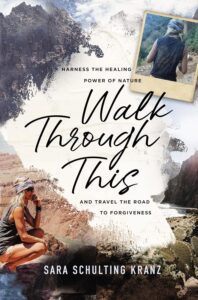
This one isn’t so much an adventure, unfortunately. When I was 16, I went through a very difficult time in my life and I was sexually assaulted when I was 16. I talk about that in the book, Walk Through This: Harness the Healing Power of Nature and Travel the Road to Forgiveness. What got me through that time, especially being in a small town and just the influx that happened to me, just the judgment, just all of it, the shame, was going out into nature.
I would go sit my pop my butt in the middle of the cornfield and look around or I’d go fishing with my mom into the creek and there was so much healing that was happening, but I didn’t even understand it back then. The thing that I started to realize was take everything that you’ve learned from your past and create the present and future that you’re walking into. Nature was a big part of it. It was a huge, huge part of it for me. Difficult time and also a learning time of resiliency.
Nature itself has so many lessons to teach us about resiliency and in letting go, but also knowing that growth happens from continuing to let the things heal. I know it’s easier said than done. That’s traumatic, especially happening in a small town or an area where you almost can’t run away from the reminder.
There were two places I went to. One was out into nature and the other was the art room. I remember I became a teacher later in my life. An art teacher, actually. My art teacher handed me the keys to his room and said, “You are welcome to come here at day or night whenever you want. Whenever you need to, go in, utilize your space, because art was a very big healing place for me too.” I’ll never forget him handing me the keys and just saying, “You do what you need to do.” that’s what I did.
Healing takes a long time. It’s not like you can rush the process. You do it on your own terms.
Feeling Unfulfilled In Her 30s And Starting To Write About Her Experiences
It’s a forever journey. What happened next? I did go to college, ended up graduating from Madison and became an art teacher, which was really big thing. I think the next biggest part that happened to me and this is my flash forward here, I had 2 more children, I had 3 kids all together, and the biggest thing that happened to me was sitting on a bed with my two girlfriends when I was in my 30s in Colorado, sitting in a bed in Denver, Colorado.
I told them I felt like I wasn’t doing enough with my life. I was like, “I just don’t feel like I’m doing enough with my life.” I couldn’t figure out what that meant. I think we’ve all been there where I’m in my 30s, I’m like, “I’m a mom.” At that point, I had given up this terrific career teaching in Wisconsin to move out to California and support my husband’s, my former husband now, my husband’s career and I felt like I was supporting everyone but myself and my dreams and my own thoughts, like how to create this better world.
I’d already lived through so much difficulty, and there’s a lot more to that story that I didn’t share, and it gets deep, and that’s why I wrote the book. At the same time, I was like, “I don’t know what’s next, but it’s not this.” I skipped over this piece, but when I was in college, I had a moment where I was driving down the road and I had this like, I don’t know, I call it a ping from God, like, “Someday you’re going to write the book, you’re going to write a book and it’s not for nothing. You’re going to end up helping other people and so just keep moving forward, keep doing the thing.
How I actually even just flipped over that one, I don’t know. I did have that moment. That moment led into my moment of sitting on the bed with my girlfriends in my 30s. From 17, 18, to I was probably 18 when I had that ping, to now in my 30s and I’m like, “What the heck’s next? What is all of this for? If I’m going through all of this and I’ve lived through so much pain and I just don’t feel like I’m living into my purpose of being here.”
What a shame. That was a huge one. My girlfriend looked at me, Stephanie, she looked at me and she said, “Right. Why don’t you just go start writing?” I wasn’t a writer. I say that. I was like, “Write. Write what?” She goes, “Start writing about your experiences. Just write it all down. Start journaling. Start doing the thing.” I remember coming home and telling my kids that because and they looked at me and they were like, “Who’s going to read it?” I was like, “I don’t know. I don’t have a clue.” that’s the point. I don’t know. Maybe somebody will. That was a big one for me.
First of all, I’m glad you mentioned that because there’s something about writing sometimes starts with like answering the questions that you most need to answer, which is “How do I get this out of me?” It’s therapeutic in the process and you’ve already been through a lot of the therapeutic things of nature, great for helping to heal.
Also, art, which is another wonderful medium for helping to make sense of the world and also to heal. Writing is the third leg of the stool in terms of being able to make sense of your world. Sure, other people will read the book, but you have to start with why am I writing the book. Sometimes it starts with again answering the question that you most trying to answer. It’s like, “What does it all mean?”
Exactly. That leads into which this now, even just talking this out, it’s funny. Before that, I had taken my sons on a six-week road trip and nobody thought I was going to do it, even my former husband. I remember so my kids were 5 and 10 and the oldest wasn’t going to go. He would have been twenty, so he was like, “I’m not doing this.” my younger ones were 5 and 10. I was like, “I just need to get out. I want to show them the world. I want to show them something other than California.” I went and rented a minivan and I started buying all the things, the tents, the whole nine yards. I started planning out the trip. I put it all together, put the itinerary, my parents were freaking out because they’re like, “You can’t just take the kids on a road trip by yourself.” I’m like, “Why not? Who says I can’t?”
It’s no different than driving from Northern California to Southern California by yourself, only you’re doing it across the states and you’re doing it multiple times. What’s the difference? I planned out this whole thing. The day I was taking off, my former husband was like, “You’re seriously doing this.” I said, “Yeah, you can meet me in South Dakota and I’ll pick you up and you can do the last trek with us if you want. This is important for the kids to get out there.”
He was supportive. He was fine once I really did show that I was doing this. I think that stepping out of your comfort zone and doing the things even when people don’t expect it of you or don’t want you to, when you know it’s the next best thing, that taught me so much about myself and my ability to stretch the limits and stretch who I am as a mom, as a partner, as with a voice, just all of it, as an adventurer.
Stepping out of your comfort zone and doing things even when others don’t expect you to—or don’t want you to—teaches you a lot about yourself and your ability to stretch your limits and grow.
It was one of the most freeing six weeks. We ended up taking my niece and my nephew and my sister-in-law. They went with us for a short portion as well, and all four of the kids have said that it was the best bonding experience that they ever went through. Of course, some of it is also because my parents did the same thing for me when we were younger. There was a little bit of a mirror happening there of “This is what it was like for me and I want you guys to experience some of this as well.”
The best thing, Tony, we did a no cell phone, no video games, no TV. You weren’t allowed any electronics in the car. I brought back the fun of car games. Remember the old car games like the ABC game where you have to catch the A, you got to catch the B, you got to catch the on the road signs and teaching them how to do triptychs from AAA. It was like old school. For me, it was such a beautiful experience to give to them.
Here I am again supporting and putting all these experiences out there, but at the same time, I’m feeling as a woman, as a human, like I’m not stepping into my full self still, yet, in my 30s. Even though I’d been doing all these super cool things, teaching in other ways, providing experiences in other ways, I just felt like I wasn’t doing enough. I still feel like that. Even at 52, almost 53, I feel like there’s so much more there for me to explore and dive into.
What I love about what you’re sharing is it has me thinking about integration, this element of you can accomplish a lot, but it’s like how do you make sense of it and integrate it into how you show up day in and day out. I think over time, you started to figure out how does this all fit into my picture, because if I just have all these parts and all these things that I do, they’re great and on their own, they stand alone, they’re amazing, but you didn’t feel the connection of why they all made sense until maybe many years later. I think that’s part of what makes it valuable is when you start to see like who does this make me.
The Devastating Discovery Of Her Former Husband’s Betrayal
That leads into the next big one. That was when I was 40 years old, literally in one night, I found out that my now former husband had been betraying me for most of our marriage. It was devastating. He came out as gay, which was devastating number two. For me it was like all of what you think to know about relationships because relationships are everything to me, my clients, my students, my former students, I still have relationships with them. They still come back to me, trusting me, having these conversations.
My clients now, like my friends, my family, my community, everything. You think about the power of relationships and then that one that’s supposed to be so most valuable to you, most important, it was just destroyed. Literally within a moment. I remember, Tony, like the moment of, “I will never be that woman again.”
The moment you find something out, it just hurts so bad. You’re like, “I will never be that woman again.” Now, in terms of resilience and leadership, there is a beauty of that. There is a beauty on the other side of, “I will never be that person again.” Sometimes you have to destroy to create. For me, it was, “Okay, now I get why I couldn’t write the book. Now I understand why I couldn’t step into that next version.”
Sometimes you have to destroy to create.
Now I understand why I felt like I wasn’t doing enough. I wasn’t doing enough because that story, that chapter of my life hadn’t been written yet. Where this goes into, this was in 2013, so this was a long time ago. I’m very lucky to be here. The deepest pain for any human. I’m sure, lie humans go through pain. The depth of pain that I felt was so vast. People don’t quite get that betrayal trauma, it’s a type of trauma where you are in constant fight, flight, or freeze. I even look back at the pictures and I’m like, “I was so small.” I had lost everything. I felt like I lost my mind, I had lost my emotions. I was in constant like, “Why?”
I forgot where you were even carrying yourself. Sometimes people even diminish themselves, so you probably were like completely deflated.
I was so deflated. The thing is that in this town that we live in, we were pretty well known. My kids are athletes, I was the volunteer mom. I was always out there doing stuff with people. For it to happen, it was this like, “I want to hide and I want to scream and I want to do all of it.” Now, the moment for me that came from that was in 2014, Labor Day weekend, when I was climbing. I started to climb a lot of mountains, I started to go down into the Grand Canyon.
I was paddling 4, 5, 6, 7 miles out into the Pacific Ocean. I was with whales and dolphins and that was my healing space. It was crazy the amount of stuff that I was doing when I had the find the time to do it. My healing was on the opposite side of parenting my kids as well and making sure that they were okay. 2014, Labor Day weekend, I was with some friends climbing in Sequoia National Park. I put my pack down to go out into the forest and go to the bathroom.
I came back, put my pack on, kept climbing. This is one of the stories that I talk about in one of my speeches in terms of like letting things go and not carrying what people constantly carry and it’s not yours to carry. I opened my pack up at one point to pull out a sandwich and I pulled out a big rock. One of my friends, long story short, kept putting rocks in my pack as I was climbing this mountain. I didn’t understand it until I got to this one beautiful ledge. I walked over and I’m standing on this ledge.
I’m looking out into this incredible valley below. I had this realization of how much had been put in my pack all my freaking life that wasn’t even mine to carry. If it was other people’s problems that created traumas in their life that then they were like throwing onto me, or whatever it was. For me, it was like, “Stop handing me your pain. I got enough of my own. Stop handing me your issues and your mistakes. I’ve got enough.”
“I’m good. I’m stepping into this next space because I don’t want to carry anything else that’s not mine.” I think we as humans do that. We as humans carry too much. Our load gets heavy and when we die, we die like, “Boy, that was a difficult life.” I don’t want to die that way. I don’t want to die regretting all the things. I
T was in that moment when I was standing there that I just had this realization of like, “Okay, I need to let all this go, strip down, and rebuild from this new space of what is mine and how do I want to live.” I did. Sold my house, I sold it all. I sold everything. I got rid of my beautiful home. I moved across the street with my kids. I just started fresh. It was so freeing and so beautiful. I wrote the book. TED talk, book, what all of it.
You’ve packed more in in your lifetime than most people can think of. I and I’m not saying that to be a judgment or against others or yourself, but I think it is it’s quite a lot. One of the things that is really amazing is you keep showing up. You do have that amazing resilience to know that if I just keep on showing up and do the things, it’s going to work out. I know in the moment, it may not feel that way, but you figure out a path to make it work.
The story about the rocks is such a powerful one because it is true. We often times just carry all these burdens and it can feel like it’s ours, but the reality is it’s coming from all these other people who feel like, “Let me tell you my problems, or let me share where I’m at,” then we take on those challenges. It feels so liberating when you can start to let go of that weight.
It’s a wild journey, this thing called life. Fast forward, do you want me to keep going?
I was going to say one other thing. You reminded me of a one of my past guests, her name is Ann Brennan and she was the strong friend and always the person who people relied on always to share their burdens with. I think that’s one of the things that’s challenging when people see you as the strong friend always, is that we need help too. Everyone has to be able to say, “Look, I’m human and I need support too, not just being the one who supports everyone.”
Transforming Her Healing Retreats Into Leadership Retreats
It’s so true. Yes, and that led me into two years of serious exploration of who I am as a woman, as a mom, as a as a daughter, as all of it. Actually, I was going to therapy at the time and one of my therapists, who is now a dear friend of mine, and she looked at me and she said, “You have to do something with this. You have to do something with this. You are healing so fast, you’re growing so fast out in nature and through this work that you’re doing. There are so many people you could help.”
I started a business and guiding people through the Grand Canyon. Back then, it was on healing retreats, helping people to grow through their traumas. What I started to realize was I was growing so much and like I said to you before we started, my book is no longer that extension it is still an extension of me, but I’m so far away from that space because I’ve done all my work.
Where I’m now stepping into is a whole other level. My healing retreats transformed into more of leadership retreats. I started leading executives through the Grand Canyon. I’ve led the USC men’s water polo team, I’ve led a female blind Olympian to set a break a world’s record. I’ve led Zara. I’ve led so many amazing teams and people through the Grand Canyon. Not just the Grand Canyon.
I’ve led them through workshops, trainings. I go in and work with businesses to help with their culture now and to develop to work through the change that they are that they walk through if it’s through acquisitions, whatever it is. I think it’s the most brilliant thing to witness when you are witnessing your own work touching and constantly transforming into the next best thing to help other people. That’s where now I need to write the next book. My former book, it’s an extension of me from me back in 2013. That’s not an extension of the woman I am now. I’m so much more past that. The work that I do is such a blessing because of what I’ve gone through back in 2013.
There’s something I always come back to, which is to say it comes from Ken Wilber, I think he’s a transcendentalist or whatever they call him. He says “transcend and include.” We include the past, we have to remember that is what got us here, but we transcend it by thinking where are we headed and what are the things that we want to lean into next that will help us to move and grow from where we are.
I always think about the iceberg metaphor. I remember going to see Simon Sinek way back in the day. He actually came around on a tour and he talked about how everyone knows him as the “Why Guy,” but there’s so much more to be revealed and the beautiful thing is I don’t even know what’s behind the surface, what’s underneath the tip of the iceberg. I think that’s a cool way to think about it. We will keep on moving forward and thinking what’s next which is wonderful but we have to always still honor and own the past. Not see it as painful but as just things that we’ve earned, we’ve experienced, and we get to keep with us.
I 100% agree with you. I think the beautiful thing about it is my book was on forgiveness, my TED talk was on forgiveness, so much of what I’ve done is on forgiveness. When you’ve gone through that journey yourself and then you’re on the other side and you’re like, “Okay, I’m also on the other side because I believe in the power of other people getting on the other side too.”
There’s this like, “I need to continue to uplevel into that next best space so that it creates the space for other people to do the same. Otherwise, what am I doing? Truly, like what am I doing?” My youngest son, he wrote something and he stuck it on the fridge before he went away to college and it said, “Keep working hard, Mom.” Is that not the most beautiful thing?
Totally. You keep that forever.
Reconnecting With Her High School Sweetheart After 32 Years And Getting Engaged
I’m now engaged. I reconnected with my high school sweetheart after 32 years. He was the very first boy that I was with when I was young and I was like, “He’s the cutest thing ever.” I believe that the divine timing. It was in divine timing that we happened to meet. It was exactly one year after my mom passed away. I posted something on Facebook and he responded to it. My mom and I were very close. Now we’re engaged. We talk about this all of the time.
Again, back to relationships. We come back into relationships, we have these relationships. If it’s our relationships with our clients, our customers, our work is a relationship with ourselves. We do it so that we can continue and we continue to learn from it and we push each other in relationship in order to step up, challenge each other to step up into that next best space.
I do all these crazy adventures with him now. We’ve done everything from the Sierra High Route to climbing crazy mountains in some of the most amazing places. We do that to continue to learn about ourselves as well and one another. You put yourself in high pressure situations like that and you learn a lot about yourself and about the other person. It’s a beautiful thing.
It’s amazing. First of all, I’m doing the Sierra High to raise money for cancer.
No way. Are you doing the high the high route or the High Sierra Trail?
The High Sierra Trail, I believe. I don’t know all the specifics of it.
It’s a trail.
It’s going to go up to 13,000 feet or something around there. I’ll have to double check. We’re doing a hike with a few other biotech executives.
That’s awesome. Keep me posted. There’s the trail, which is amazing. It’s funny because I was actually thinking about doing that again. I’ve done the trail a couple of times. The trail is beautiful. You’re going to love it. There’s the route. The route, it’s the top peaks of the Sierra Nevada mountains and it’s one of the most dangerous and difficult route in the United States next to the Wind River route as well. I’m excited to hear about it. You’ll love it. It’s good stuff. You’re going to love it.
We could talk about mountains all day or adventure. I do want to create space for us to come to a close on this. First of all, you shared so many things that I’m just blown away. It’s very clear that all these experiences have made you into the a very resilient person, but also someone who still feels very deeply about all the relationships that you have and you want to make sure that your relationships are founded on deep trust, but also on a sense of adventure and continuing to see where things can lead to next. You’re far from done exposing people to all the new ideas that you have and the things that you’re going to be leading forward for next. I can’t wait for your next book, so let’s see when that’s going to be. No pressure.
I’m excited about it. It’s up there. It has to come out, but it’s up there.
Speaking of books, what are 1 or 2 books, maybe more, that have had an impact on you and why?
There are a couple things. Florence Williams is a dear friend of mine. I’m going to plug her book. The Nature Fix was one of them. It’s all about how nature heals and transforms our body. It’s more of like the science of it. She and I run retreats together up in Telluride now and in the San Juan Mountains and it’s really cool because when you’re sitting there wondering, like, “Does this really work?” go read her book because it does. There’s a lot of science behind it.
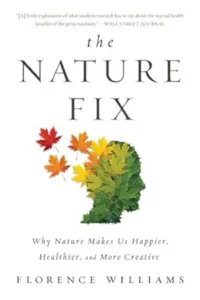
She would be one of them. Alison Levine is another friend of mine who I love and, believe it or not, I always tell her this and she’s always like, “Stop.” she wrote On the Edge. She’s a leadership speaker and she’s incredible and funny and so funny. When I was going through my trauma, believe it or not, one of my friends said they went and got it. I didn’t even know who she was. I was like, “Who’s this person?”
They went and got one of her signed books and they brought it directly to my house and they said, “You need to read this. This reminds me of you. I think it’s going to be helpful.” Now, realize I’m in trauma. Trauma brain doesn’t let you read. It was the very first and only book that I could sit down and read cover to cover in two years because in trauma brain, you’re so distorted like your brain cannot focus. You either can’t focus or you fall asleep, one of the other.
I always tell her that was transformative for me in terms of my own personal leadership at that time. The other books, anything by Jerry Jellison. He’s a former University of Southern California professor. Now, he passed away. His books, I believe, were before his time. He talks about the five stages of change, which I now, in my own way, implement and utilize it in the Grand using the Grand Canyon as a metaphor.
What he says, again, I’m giving you my version of it and the work that I’ve done throughout the time, but I’ve also read his stuff and it’s incredible. We approach change, we descend into change, we’re at the valley floor of change, think the Grand Canyon here we ascend out of change, and then we continue the climb. I utilize my favorite my own version thought leadership on the five stages of change using the Grand Canyon as a metaphor and how we build resilience tools leadership tools along the way through every single stage.
Also, what happens in our life, like why do we have such a hard time approaching change or taking that step in. I’ve got former clients that where they’re just like, “I can’t get the divorce done. I’m in stage 1 and 2.” You explain it to them and they’re like, “Nobody’s ever explained that to me.” I’m like, “That’s why you’re still hung up there. That’s why you can’t climb out. Here’s why. Here are the reasons why.”
When I’m working with businesses and organizations and various things clients, it’s utilizing the five stages of change now. His work, I believe, was truly before his time. I reached out. I didn’t realize he’d passed away and I reached out to him and his wife texted me back and said, “I’m so happy that you have been able to take his legacy and continue it on in this way because what his work was transformative.” I sit there and I read it and I’m like, “Well, yeah, and it was before his time.” It was before the world actually even could grasp it to the degree that it really needs to be grasped.
I’m going to have to do some sleuthing myself to dig into his work because it sounds fascinating, right up my alley.
It’s fascinating. It’s good stuff. You’re going to love it.
Sara, I know we’re up on time and I’ll just say thank you so very much for sharing all that you did. Again, I feel like we just touched the surface, but we touched so much ground and I’m just so grateful and honored that you came to this show.
Thank you. Thank you for having me. It’s been my pleasure and I appreciate you.
Thank you. Before you jump off, what’s the best place for people to reach out to if they want to learn more about you and your work?
Absolutely. You can reach out to me at Sara@SaraSchultingKranz.com. Find me on LinkedIn, Sara Schulting-Kranz. I’m on Instagram. I’m not on Threads or any of that stuff, sorry. Not on X. Instagram, Facebook, and LinkedIn. I’m on LinkedIn a lot more than anything. Yes, but reach out, please. Let’s talk.
Sounds amazing. I love it. Thank you again. Thanks to the readers for coming in the journey. That is a wrap.