


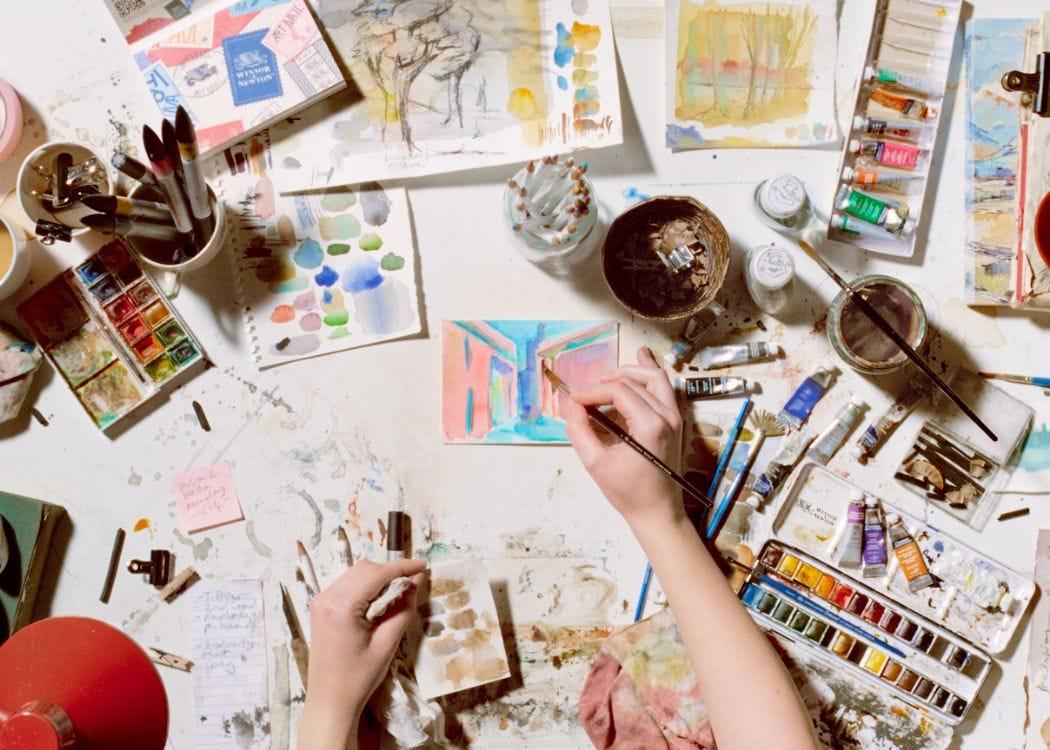
“It is a happy talent to know how to play.” — Ralph Waldo Emerson
A few months ago, I found myself in a conversation that has stayed with me. I was sitting with Jill Bolte-Taylor at the TED Conference in Vancouver. Jill is a neuroanatomist, author, and, in my experience, one of those rare people who seem to illuminate a room simply by being in it. Our conversation drifted into the terrain of identity: how it forms, what shapes it, and perhaps most intriguingly, how we reconnect with the parts of ourselves that have quietly fallen out of reach. She has also been one of my favorite guests on The Virtual Campfire podcast. Our conversation wandered into the territory of the brain and identity: how identity takes shape, what influences it, and maybe most intriguingly, how we might reclaim the parts of ourselves that have drifted out of reach.
At one point, she offered something that felt like it pulled a thread I have been following for years: our sense of self isn’t fixed. It’s fluid, shaped by experience, attention, and the environments we inhabit. When we return to earlier states with curiosity, wonder, and the willingness to experiment, we are not regressing; we are stepping into a different mode of being. One that is more creative, more receptive, and in many ways, more fully our own.
It left me with a question: What is the most reliable doorway back to that mode? For me, the answer is simple. Play.
The Mask Comes Off When We Play
Play feels fundamentally different from performing. When we’re performing, we’re optimizing, calibrating, and managing perception. When we’re playing, something else takes over. We experiment without needing a guaranteed outcome. We stumble without attaching it to our identity. We allow something unexpected to take shape.
Children do this instinctively. Somewhere along the way, most of us are trained out of it. Not abruptly, but gradually. We learn to value productivity over curiosity, results over exploration, polish over discovery. By the time we step into leadership roles, play has often been edited out and replaced by responsibility. And yet, the version of ourselves that emerges in play is often the most real. It’s the part that hasn’t been shaped to fit the room. The part that remembers what actually sparks interest, what creates energy, what feels alive. Play isn’t an escape from identity. It’s a return to it.
This is a theme I keep encountering as I work on my next book, Illuminating Hidden Brilliance (coming out in Fall 2026). The discovery process isn’t about adding something new. It’s about revisiting what was once natural before performance took over. And for many people, play is the most direct path back.
What Play Reveals: A Lesson from Alexander Calder
In 1926, a young mechanical engineer named Alexander Calder arrived in Paris without a clear plan for what he would become. What he did have was a habit of playing. He began bending wire into figures—acrobats, clowns, performers—animating them by hand. Over time, this became an elaborate miniature circus that he would perform from the floor of his studio. His audience included artists like Marcel Duchamp, Piet Mondrian, and Joan Miró, yet Calder himself didn’t take it too seriously. He once described it as “a very amusing stunt cleverly executed.” But something was happening.
Through play, he became fascinated with movement, balance, and tension. That curiosity eventually led him to ask a question that would define his career: Why must art be static? The answer became the mobile, kinetic sculptures that redefined modern art. The Whitney Museum now considers the circus the foundation of everything Calder later created. Not because it was strategic, but because it was playful.
What matters here isn’t just the outcome; it’s permission. Calder allowed himself to follow what intrigued him before he understood its purpose. That kind of permission is rare and powerful.
Play Is Not the Opposite of Serious
There’s a persistent belief that play and rigor don’t belong in the same space, but the evidence suggests otherwise. Consider Atlassian, the Australian software company behind tools like Jira and Confluence, and their long-running “ShipIt Days.” For 24 hours, employees set aside their regular work and build anything they believe could improve the company. It’s playful by design but also structured. They have food trucks, themed ceremonies, after-parties, and a coveted Founders Prize, which are all part of the design.
The results speak for themselves. Major products and features have emerged from these sprints. More importantly, people bring different qualities of energy and thinking to the work. The key is not to play for its own sake; it’s intentional play. A container where experimentation is safe, stakes are real, and people are invited to show up differently.
In my experience, some of the most innovative work doesn’t come from more pressure. It comes from environments where people feel safe enough to explore without needing to prove something. Play creates that condition.
Bringing Play Back Into Leadership
This doesn’t require a radical shift. It starts small. Set aside time for unstructured exploration, in other words, take time without an outcome attached. Leaders who do this often find that their best insights don’t emerge in meetings but in moments when their thinking has room to breathe.
You can also introduce play into your team’s rhythm. Ask questions that don’t have a right answer. Create moments where people can think beyond the immediate task. These aren’t distractions. They’re openings into a different mode of thinking. And often, that mode reveals something important.
One of my past guests on The Virtual Campfire, Megan Reitz, describes two modes of attention: the doing mode and the spacious mode. Doing mode is focused, efficient, and necessary. But in spacious mode, we notice patterns, deepen relationships, and see possibilities we might otherwise miss. Play is one of the most direct ways into that state. It slows us down just enough, and it shifts us from execution to exploration. And in that space, something becomes available that’s harder to access otherwise: A more integrated version of ourselves.
If you’re leading a team that feels stuck, reactive, or flat, it may not be a strategy problem. It may be that the conditions for spacious thinking and for play have been crowded out. The leaders I admire most don’t just tolerate that space; they protect it because the path back to yourself—the multidimensional, creative, fully alive version of you—often runs right through it.
If you’re ready to explore how this shows up in your leadership or your organization, let’s continue the conversation.
Join my newsletter
Or book time to connect.