

“We do not see things as they are. We see them as we are.” — Anaïs Nin
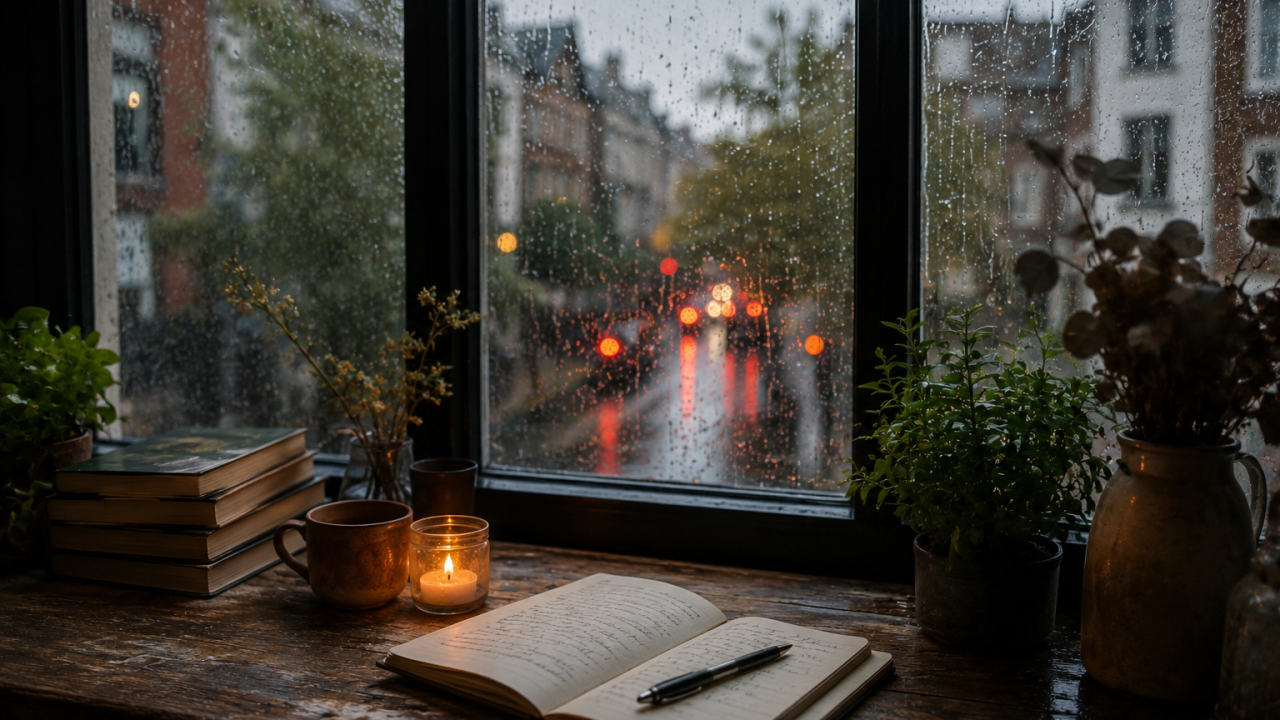
There is a particular kind of darkness that lets you see. Not the absence of light, but the dimming of everything you had been using light to avoid.
For most of us, the spring of 2020 was that dimming. The machinery stopped. The commute, the calendar, the hum of motion we had mistaken for meaning, all of it went quiet at once. And in that quiet, something happened that we are still, years later, struggling to name. We looked up from our running and saw ourselves.
I think about that often, because it is the question underneath all my work: what do we discover when the performance pauses? Before the pandemic, most of us were living in one dimension. We had become very good at doing and had forgotten, not always, but mostly, how to be. We answered the question “How are you?” by listing activities. We measured our days in output and our worth in motion. Our definition of “self” had become a résumé we were perpetually updating, and we had lost the thread connecting the person to the production.
Then the world sent everyone home.
What followed was not rest, exactly. It was reckoning. Stripped of the roles we hid inside, we met the parts of ourselves we had been outrunning. People who had not been alone with their own thoughts in years suddenly had nothing but. Some of us baked bread, as if our hands remembered something our calendars had forgotten. Some of us wept at our kitchen tables. Many of us asked, for the first time in a long time, a dangerous and clarifying question: Have I been living the life I actually want?
That question was the awakening. And it was collective.
This is the part we tend to underplay. The pandemic was a private grief lived by everyone simultaneously, a strange and singular fact of human history, that nearly all of us were undergoing the same interior excavation at the same hour. We discovered our interdependence not as a concept but as a condition. The grocery worker, the nurse, the neighbor down the hall, the people we had rendered invisible turned out to be holding the whole thing up. For a moment, we saw the architecture of our connection plainly. We understood that no one is whole alone.
And we changed. The Great Resignation was not laziness. It was people refusing to climb mountains they had never chosen. The hunger for purpose, for flexibility, for work that did not cost us our souls, that was not a trend. It was a population waking up to the gap between the life they were performing and the life they were living.
But Awakenings Are Hard to Keep
Here is the harder truth, the one worth sitting with. Awakenings are easy to have and difficult to keep.
The machinery restarted. The calendars refilled. And much of what we glimpsed in the quiet has been compressed back beneath the foundation, the way a city gets rebuilt on top of its own rubble, not erased but paved over. We remember that we questioned everything. We have mostly forgotten the answers we found. The numbness we named so clearly in 2020 has crept back, wearing the familiar costume of busyness, because busyness was always easier than wholeness.
This is the pattern of every awakening. The light pours in, and then we build a roof.
The Second Disruption
Which brings me to the strange new flashpoint we have been given. Because just as we were settling back into our forgetting, artificial intelligence arrived and asked the question all over again, in a different tone: What, exactly, makes you you?
For three years, the pandemic taught us we are more than our productivity. Now AI is teaching us the same lesson by force. The machine can draft, analyze, summarize, and optimize. It can do the doing. And so the things we had used to define ourselves — competence, output, the sheer ability to get the work done — are being lifted off our shoulders, whether we wanted them lifted or not.
Daniel Roher, the Oscar-winning documentary filmmaker who made The AI Doc: Or How I Became an Apocaloptimist, put his finger on exactly what is at stake. In making the film, he came to believe that what AI has triggered is not primarily a technology crisis. It is, in his words, an empowerment crisis about what it means to be human and to exist. He is right. And I find his framing useful not because it is alarming, but because it is clarifying. When the doing can be delegated, we are finally forced to answer the question we kept deferring: Who am I when I am not being useful?
The pandemic reminded us that we are not what we do. AI is making it true.
What is left when the doing is delegated? The same thing that was left when the world went quiet in 2020: our presence, our meaning-making, our capacity to sense what is true beneath what is merely happening. The integration of who we are, how we lead, and why we are here. Wholeness was always our birthright. It is becoming our only remaining advantage.
I find a strange hope in this. Two great disruptions, five years apart, both pointing at the same buried door. The pandemic cracked it open through loss. AI is widening it through obsolescence. Both are telling us, in the only language vast enough to reach all of us at once, that the parts of ourselves we exiled in order to succeed are precisely the parts the future requires.
We were illuminated from within all along. We simply needed the lights to go out to notice.
So the reflection I will leave you with is this: the awakening is not behind us. It is a door that keeps reopening. And the only question is whether we walk through it this time, or build another roof. What have moments of disruption shown you about yourself, and what would it take to stop forgetting?
If this resonated with you and you’re thinking about what it might look like to bring more of this into your work, I’d invite you to stay connected.
Join my newsletter
Or book time to connect.