

The art of the streets is the art of the people who have been left out of the art.
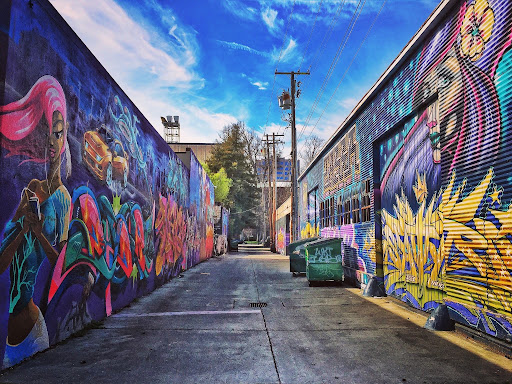
I have a confession that surprises people who know me as a leadership advisor. I am fascinated by graffiti art. Whenever I travel, I find myself looking at the sides of old buildings, highway underpasses, the backs of loading docks, anywhere someone with a spray can and something to say decided this concrete would carry their voice, whether the city liked it or not. I have come to believe these walls hold a truth about human beings that the other rooms keep trying to forget. But first, let me tell you where this art form actually comes from, because the origin is not what most people think.
The Oldest Signature on Earth
We tend to imagine graffiti as a modern act: we think of the subway cars, hip-hop artists, the 1970s spray can as a tool of urban rebellion. All of that is real, and I will come back to it. But the impulse is far older. There is graffiti on the walls of Pompeii. There are names scratched into the monuments of ancient Egypt, Greece, and Rome. Here is the detail that stopped me cold when I first learned it. Historians studying antiquity often rely on these scratched names to identify everyday people whose lives were never recorded anywhere else. No census, no scroll, no official history, just a name pressed into a wall two thousand years ago that said, in effect, I was here.
Before graffiti was rebellion, before it was art, it was a human being refusing to be invisible. The powerful got monuments and their names in the record while everyone else got a wall and a moment of nerve. That is not a footnote to the history of graffiti. That is the whole thing.
A Voice That Refuses to Wait for Permission
Fast-forward to Philadelphia in the late 1960s and New York in the 1970s, and the pattern repeats exactly. Graffiti reemerged not among the comfortable, but at the margins, among young people from communities the city was actively neglecting, precisely because the museums and the halls of power were closed to them. They made their own gallery out of the city itself. Decades later, Banksy took the same impulse and turned it into some of the most widely discussed political commentary of our era: a girl reaching for a balloon, a piece that famously shredded itself the moment it sold at auction, all made by someone who never asked permission to enter the conversation. Shepard Fairey’s Obama “HOPE” poster did something similar on a national scale: an image that shaped how millions of people felt, built not through official channels but through the same street sensibility of putting a bold, unignorable image where people live. A mark on a wall can change a mind. Not a memo, not a mandate, not a strategy deck. That is the power of expression that comes from the whole person rather than the permitted fragment.
The Wall in Every One of Us
Now let me bring this where I actually live, because I do not think graffiti is only about art or only about the streets. I spend my days with leaders and organizations, and the pattern I see most often is the exact inverse of the artist with the spray can. Where the graffiti writer refuses to leave their fullest self unexpressed, most people at work do the opposite. They quietly agree to leave the truest, most creative, most alive parts of themselves outside the building, bringing only the narrow, polished fragment the org chart asked for, and letting everything else go dormant. The wall stays blank, not because they have nothing to say, but because no one hands them a canvas, and they stop believing they are allowed to pick up the brush.
My dear friend, Moe Carrick, who studies workplace connection, names exactly what happens next. People can be fully engaged with their tasks and still feel completely unseen, present in every meeting and invisible in every one of them. That gap is the blank wall, dressed in professional clothes. The artist and the disengaged employee are answering the same question. Will I let myself be fully seen, or will I suppress what is fully alive inside me? When people bring only the permitted fragment of who they are, organizations lose exactly what they say they are desperate for: the original idea, the creative leap, the conviction that moves people. All of it was there. It just never made it onto the wall.
The revolutionary act of graffiti was never really the paint. It was the refusal to accept that a voice needed someone else’s permission to exist. That refusal is available to every one of us, in far less dangerous forms than climbing a train yard at night, every time we bring the fuller, truer version of ourselves into a room that was only expecting the safe one.
What the Wall Is Asking You
The person who scratched their name into a wall in Pompeii had no gallery, no permission, and every reason to stay quiet. They marked it anyway, because something in them refused to stay invisible. Here is the humbling part. Most of us have far more surfaces available to us than they ever did: a meeting, a decision, a conversation, a room full of people waiting to see what we actually think, and we use them to express so much less of who we are. They had a wall and a moment of nerve. We have a hundred walls a day and keep most of them blank.
That is the invitation graffiti has been making for two thousand years, from a scratched name in Pompeii to a stencil on a London underpass. Not deface something. Something quieter and harder. Refuse to be invisible. Stop waiting for a gallery that was never going to open its doors. The truest, most alive part of you does not need anyone’s permission to exist. It only needs you to stop leaving it at the door.
The wall was never blank because there was nothing to say. It was blank because someone wrongly decided their voice did not belong there. There is a whole self in you the world has not seen yet, and tomorrow is another wall.
If this resonated with you and you’re thinking about what it might look like to bring more of this into your work, I’d invite you to stay connected.
Join my newsletter
Or book time to connect.