


What if the most extraordinary thing about the human mind is not how much it knows, but how much it can become?
We spend our lives relying on the familiar: the stories we tell ourselves, the language we use to make sense of experience, and the routines that help us navigate the world. But what happens when those familiar ways of understanding suddenly fall away? And what might art, curiosity, and creative expression reveal about who we are beneath them?
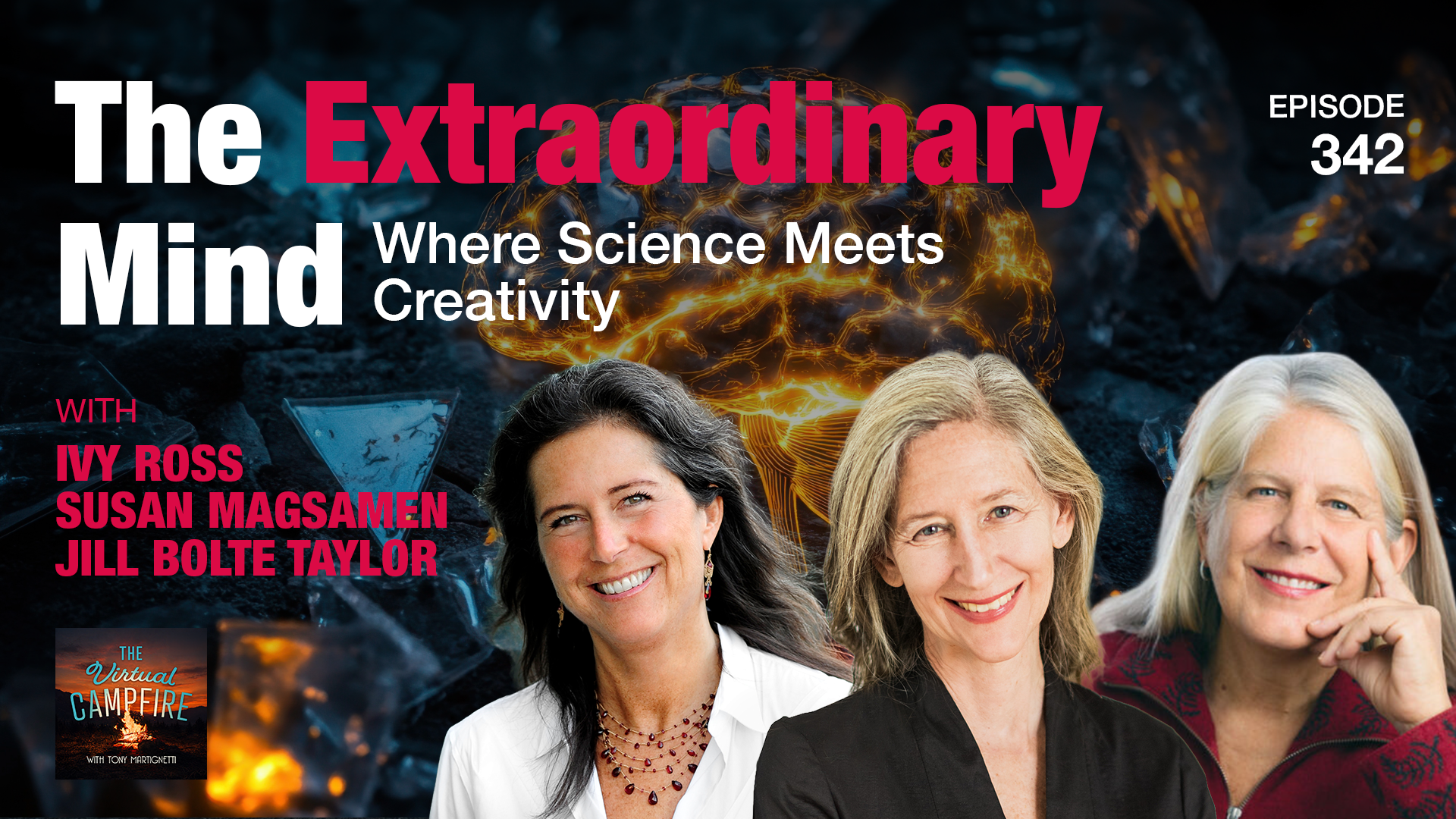
In this special episode of The Virtual Campfire, Tony Martignetti brings together three remarkable voices from two original conversations: Dr. Jill Bolte Taylor, the neuroanatomist whose life was transformed by a stroke, and Susan Magsamen and Ivy Ross, co-authors of Your Brain on Art. Their stories begin in very different places, yet they converge around one compelling possibility: living more fully may require us to make room for more than thinking alone.
When the familiar mind disappears
At 37, Jill Bolte Taylor was teaching and researching at Harvard Medical School when she experienced a devastating hemorrhagic stroke. As a brain scientist, she recognized the functions she was losing even as she struggled to walk, speak, read, write, and recall her own life. What followed was not a straightforward return to the person she had been. It was a long, painstaking process of rebuilding, one ability and one choice at a time.
Jill describes how the stroke altered her experience of awareness, identity, and the present moment. Her account is a personal interpretation of an extraordinary neurological event, but the human lesson reaches far beyond neuroscience: when the old way forward is no longer available, we can begin with what is possible now. Recovery, she explains, meant refusing to measure every day against the life she had lost. Instead, she focused on the very next step and allowed herself to rest when rest was what she needed.
When art speaks where words cannot
Susan Magsamen’s understanding of creative expression began with an intimate family experience. When her twin sister suffered a traumatic farming accident as a child, she struggled to talk about what had happened. Their mother encouraged her to draw. Through images, symbols, and stories, feelings that could not easily be spoken began to emerge. The drawings also gave Susan a way to reconnect with her sister.
That experience helped shape Susan’s lifelong interest in the many ways people communicate, learn, and heal. In her work exploring the relationship between the arts and the brain, she asks us to reconsider an assumption many of us carry: that art is an optional extra, something to enjoy after the important work is finished. What if creative expression belongs closer to the center of how we experience life?
The creative power of paying attention
For Ivy Ross, curiosity was cultivated early. Her father, a designer, taught her to look at ordinary objects and ask what else they could be. A lamp was not simply a lamp; it was an invitation to imagine connections, possibilities, and new forms. That habit of noticing became a foundation for her life as an artist and design leader.
Ivy and Susan discovered that the supposed divide between art and science is not as wide as it appears. Both artists and scientists ask questions. Both experiment without knowing exactly what they will find. Both need the freedom to be surprised. Their collaboration on Your Brain on Art became an example of that process: curiosity, conversation, and the willingness to let an idea develop before demanding a final answer.
An unexpected connection across two conversations
One of the most memorable moments in this special was never planned. During Tony’s original conversation with Susan and Ivy, Ivy brought up Jill Bolte Taylor and reflected on the relationship between feeling and thinking. Tony had only recently spoken with Jill himself. Suddenly, two separate interviews were in dialogue with each other.
That coincidence gives this episode its deeper shape. Jill’s story asks what remains when familiar mental abilities are disrupted. Susan’s story reveals how expression can emerge without words. Ivy’s perspective invites us to explore the world without demanding that every discovery serve a predetermined goal. Together, their insights suggest that awareness, imagination, and connection are not competing parts of being human—they enrich one another.
Why the pause matters
There is another thread running through these conversations: the importance of slowing down. Jill speaks about the restorative role of sleep during recovery. Susan reflects on patience, ambiguity, and the discoveries that emerge when an idea is allowed to develop. Ivy questions the habit of treating people like machines built only for efficiency and output.
Tony connects these insights to his own experience of finding space for reflection in nature and museums. A walk, an unfamiliar painting, or a quiet moment away from the screen can interrupt our usual patterns and invite us to notice something new. The point is not to turn every pause into another productivity technique. It is to remember that the experience of being alive deserves our attention.
You do not need permission to be creative
Perhaps the most liberating idea in this episode is also the simplest: you do not have to be an artist to create. You do not have to be talented, accomplished, or paid for your work. Drawing, singing, making, observing, and experimenting can matter even when nobody else ever sees the result. Creative expression can be a way of listening to yourself, and of reaching toward other people.
Jill closes the circle by emphasizing adaptability. Life will not always unfold as expected, and we cannot remove uncertainty from the world. But we can respond with flexibility, curiosity, and care. Sometimes the smallest act of making, pausing, or connecting becomes a way to begin again.
In this episode, you’ll discover
- How Jill Bolte Taylor’s stroke challenged her experience of identity and reshaped her approach to recovery.
- Why Susan Magsamen sees art as a powerful form of expression when words are not enough.
- How Ivy Ross learned to make curiosity and creative exploration everyday practices.
- The surprising moment when two separate interviews connected through Jill’s work.
- Why rest, ambiguity, and intentional pauses can make space for new perspectives.
- How creativity can foster personal expression, resilience, and community without requiring artistic expertise.
A reflection to carry forward
What might change if you stopped asking whether you were good at something and started asking what it allowed you to feel, notice, or understand?
This week, give yourself permission to pause. Make something that nobody needs to see. Take a walk and pay attention to what you normally overlook. Or reach out to someone through a shared creative experience. You may discover that living more fully is less about doing more, and more about becoming present to what is already here.
About Our Guests
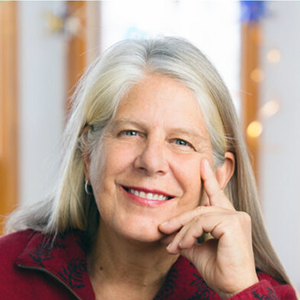
Dr. Jill Bolte Taylor
Neuroanatomist, Author & Brain Health Advocate
Dr. Jill Bolte Taylor is a Harvard-trained neuroanatomist whose life changed dramatically when she experienced a severe stroke at age 37. Her remarkable eight-year recovery transformed her understanding of the human brain, consciousness, and our capacity for resilience. Best known for her bestselling books My Stroke of Insight and Whole Brain Living, Jill offers a powerful perspective on how we think, feel, adapt, and rediscover ourselves.
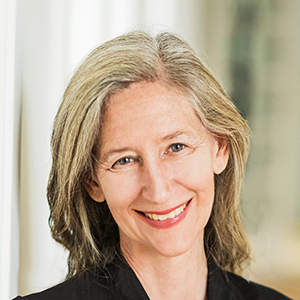
Susan Magsamen
Neuroscientific Research Leader, Author & Neuroarts Advocate
Susan Magsamen is the founder and executive director of the International Arts + Mind Lab at Johns Hopkins University, where she explores the relationship between artistic experiences, brain function, health, and human development. As co-author of Your Brain on Art, Susan is helping reshape how we understand creativity—not simply as a form of expression, but as an essential part of how we learn, connect, and thrive.
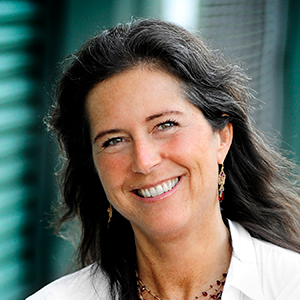
Ivy Ross
Designer, Creative Leader & Author
Ivy Ross is a renowned designer and creative leader whose career has been driven by curiosity, imagination, and a fascination with human potential. As Google’s Chief Design Officer for Consumer Devices and co-author of Your Brain on Art, Ivy brings together design, neuroscience, and creative exploration to demonstrate how art can expand our thinking, deepen our connections, and help us experience life more fully.
IMPORTANT LINKS FROM THE SHOW
Dr. Jill Bolte Taylor’s Links
Dr Jill’s Website
drjilltaylor.com
Dr Jill’s Instagram
drjillboltetaylor
Dr Jill’s Book
Whole Brain Living Anatomy
Susan Magsamen’s Links
Susan’s Website
Your Brain on Art
Susan’s LinkedIn
Susan-magsamen
Susan and Ivy’s Book
Your Brain on Art Book
Ivy Ross’s Links